Dumbbell Surface Finishes Comparision. Walk into any commercial gym and you will find at least two — and often three — different dumbbell surface finishes coexisting in the same free weight area: rubber-coated hex dumbbells at the lighter end, CPU or urethane rounds from mid-range upward, and possibly chrome or bare iron handles threading through the lineup. This coexistence is not accidental — it reflects the fact that different surface finishes serve genuinely different purposes, address different buyer priorities, and carry different cost structures. For fitness equipment brands building or specifying a dumbbell line, and for OEM buyers defining production specifications, understanding these differences precisely is the difference between a product that serves its intended market and one that either over-engineers at the wrong price point or under-delivers against buyer expectations.
This guide examines the three dominant dumbbell surface finishes used in commercial and home fitness equipment — standard rubber (SBR), polyurethane in its CPU and TPU variants, and chrome — from a manufacturer’s perspective: how each is made, what it delivers, what it costs, and which market applications it serves best.
The Surface Finish Decision and Why It Matters
Surface finish selection in dumbbell production is not an aesthetic afterthought — it determines the product’s durability profile, user experience characteristics, production cost, market positioning, and the channel through which it can be competitively sold. A dumbbell specified with standard SBR rubber coating and a dumbbell specified with cast polyurethane (CPU) coating may have identical cast iron cores, identical handle dimensions, and identical weight denominations — but they will sell at different price points, through different channels, to buyers with different evaluation criteria, and will have meaningfully different lifespans in commercial use.
The specification decision must therefore be made in the context of the product’s intended market channel, target price point, and expected use frequency — not based on abstract material quality rankings. There is no universally “best” dumbbell surface finish; there is a best fit for each application context.
Option 1: Standard Rubber Coating (SBR / Vulcanized Rubber)
Rubber-coated dumbbells have been a commercial gym staple for decades. The rubber coating — applied over a cast iron core through a vulcanization molding process — provides floor protection, noise reduction, and surface durability superior to bare cast iron, at a cost premium that remains competitive in both home and commercial price tiers.
Manufacturing Process
Standard rubber dumbbell coating uses styrene-butadiene rubber (SBR) compound — either virgin SBR, recycled SBR, or a blend of both — mixed with vulcanizing agents, colorants, and surface treatment chemicals. The compound is loaded into a mold shaped to the dumbbell head profile, and the cast iron core is inserted. The mold is then closed and subjected to heat and pressure (typically 150–180°C for 8–15 minutes) to vulcanize the rubber — forming permanent covalent cross-links in the rubber polymer that create the solid, elastic coating. After demolding, the heads are inspected, trimmed of flash, and assembled with the chrome or black-oxide finished steel handle.
The recycled rubber content in the compound is one of the most commercially significant specification variables in SBR rubber coating. Higher recycled content lowers material cost but can affect surface uniformity, color consistency, and long-term surface integrity. Most commercial gym-quality rubber dumbbells use blends of 20–40% recycled content; budget-tier products may use higher recycled content ratios. Specifying the acceptable recycled content range in OEM production documentation is an important quality control step that brands frequently overlook.
Performance Characteristics
- Floor protection: Excellent — rubber absorbs impact and prevents floor marking when dumbbells are set down or accidentally dropped.
- Noise reduction: When dropped, rubber dumbbells are quieter, making them ideal for home use or noise-sensitive environments.
- Odor: New rubber dumbbells can have a strong odor, which may take some time to dissipate. The rubber smell is a consistent first-impression negative for retail and premium commercial settings, though it diminishes with use and ventilation.
- Grip: Moderate. The rubber surface provides adequate grip under normal training conditions, though the hex geometry of most rubber dumbbells serves as the primary non-roll and positional control feature.
- Durability: Rubber-coated dumbbells may show signs of cracking or fading over time, especially if exposed to direct sunlight or extreme temperatures. They are best suited for home or garage gyms with moderate wear-and-tear demands. In heavy commercial use, rubber coating typically begins showing surface degradation (small cracks, surface checking) after 5–8 years of daily multi-user operation — a commercially acceptable lifespan for most operators at the price point.
- Cleaning agent resistance: Standard SBR rubber degrades with repeated exposure to harsh cleaning chemicals (bleach-based cleaners, certain quaternary ammonium compounds). Commercial facilities using aggressive cleaning protocols should specify cleaning agent compatibility in dumbbell coating specifications.
Cost and Market Position
Standard rubber-coated dumbbells represent the cost-competitive tier of the coated dumbbell market. Their lower material and processing cost relative to CPU or urethane makes them the default specification for price-sensitive commercial procurement, entry-level retail, and the home gym consumer tier where initial cost dominates the purchase decision. Most commercial gym dumbbells in the $15–$50 per pair range fall into this category.

Option 2: Polyurethane Coating — CPU vs TPU
Polyurethane (PU) coating represents the premium tier of dumbbell surface finishes. Unlike rubber, which is a natural polymer vulcanized into a solid coating, polyurethane is a synthetic polymer — manufactured by reacting diisocyanates with polyols to form a highly configurable elastomeric material. Within the PU category, two distinct production processes produce products with meaningfully different performance characteristics: cast polyurethane (CPU) and thermoplastic polyurethane (TPU).
CPU (Cast Polyurethane): The Commercial Premium Standard
CPU (Cast Polyurethane) is made by pouring liquid polyurethane into a mould, where it hardens to form a durable coating. It’s tough, long-lasting, and perfect for high-wear environments like commercial gyms. The casting process allows CPU to achieve very high dimensional accuracy and surface consistency — producing uniformly smooth surfaces with precise weight head dimensions across the entire production run.
CPU’s performance advantages over rubber are multiple and well-documented. In a commercial gym or high-performance setting, urethane or polyurethane (PU) dumbbells are the most popular selection due to their looks, durability, and longevity. The six key features that distinguish CPU from rubber alternatives are: superior durability (solid steel core and strong outer coating ensuring greater wear resistance), consistency (cast moulding produces complete matching weights with a smaller profile and large range), better grip than TPU, odorlessness, superior aesthetics, and long-term value. CPU offers a better grip than TPU, as the denser material creates a more textured surface resulting in a more secure and comfortable grip.
From an OEM manufacturing perspective, CPU coating requires more sophisticated production infrastructure than rubber vulcanization: precise two-component mixing systems for the polyol and isocyanate components, controlled-temperature casting cells, precise mold design for the casting geometry, and post-curing processes that fully develop the coating’s mechanical properties. The result is higher per-unit cost than rubber but a superior product on every performance dimension relevant to commercial gym durability.
TPU (Thermoplastic Polyurethane): The Midpoint Option
TPU (Thermoplastic Polyurethane), unlike CPU, can be melted and reshaped, making it more flexible. It’s softer than CPU but still highly resistant to abrasion and wear, often found in home gym setups or lighter-use scenarios. TPU is processed through injection molding rather than casting, which enables higher-volume, lower-per-unit-cost production compared to CPU — but at the cost of some of CPU’s performance attributes.
The key differences between CPU and TPU in practice: TPU has a smoother surface, making them less suitable for exercises that require a secure grip. CPU is a more durable material. TPU dumbbells typically last around 4 years — shorter than CPU dumbbells — meaning they’ll likely need to be replaced sooner in commercial settings. For OEM programs targeting the midmarket — above rubber in quality but below top-tier CPU commercial — TPU provides a commercially viable intermediate specification.
UV Stability and Chemical Resistance
One of PU coating’s significant advantages over rubber in commercial and high-light environments is UV stability. Rubber is susceptible to UV degradation — surface oxidation, color fading, and surface brittleness increase with UV exposure over time. PU coatings, particularly CPU, are significantly more UV-stable, maintaining color consistency and surface integrity in windowed commercial facilities where rubber dumbbells would show progressive UV-induced degradation. For product lines targeting hotel fitness centers, boutique studios with architectural lighting, or any high-UV environment, PU coating’s UV stability is a meaningful specification advantage.
| Performance Dimension | SBR Rubber | TPU | CPU |
|---|---|---|---|
| Durability (commercial use) | Good (5–8 years) | Better (~4+ years with proper use) | Best (10–15+ years) |
| Odor (new product) | Strong rubber smell initially | Mild | Essentially odorless |
| Grip quality | Good (soft, tactile) | Moderate (smooth surface) | Good (textured, dense) |
| Floor protection | Excellent (soft impact absorption) | Good | Good (harder surface) |
| UV resistance | Poor (fades and oxidizes) | Good | Excellent |
| Chemical / cleaner resistance | Moderate (degrades with harsh cleaners) | Good | Excellent |
| Surface aesthetic | Functional; can show age | Clean and uniform | Premium; consistent across production |
| Noise on drop | Low (soft absorption) | Low–moderate | Moderate (harder surface) |
| Relative production cost | Baseline (1.0×) | 1.3–1.6× | 1.7–2.2× |
| Typical market application | Home gym, entry commercial, institutional budget | Mid-market commercial, premium home gym | Premium commercial, hotel, boutique studio |
Option 3: Chrome and Metallic Finishes
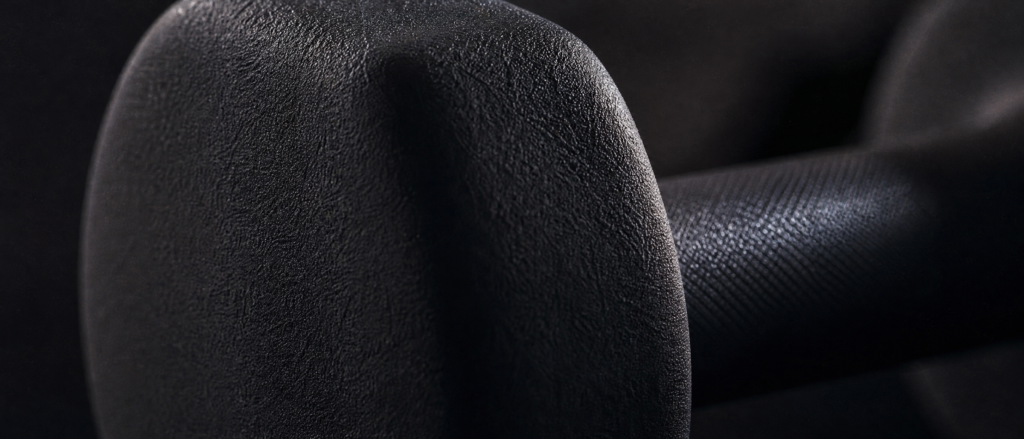
Chrome-finished dumbbells occupy a distinct position in the market — primarily associated with traditional fitness aesthetics, studio environments, and lighter weight ranges. The chrome finish is applied through electroplating: a thin layer of chromium is electrodeposited onto the cast iron or steel dumbbell head, creating a highly reflective, smooth metallic surface.
Chrome’s Strengths and Limitations
Chrome offers genuine aesthetic advantages in specific environments: the high-gloss reflective surface creates a clean, traditional studio aesthetic that suits pilates studios, yoga studios, and boutique environments where the visual vocabulary of the fitness space is carefully managed. Chrome is also easy to clean and does not accumulate surface odor, making it appropriate for shared studio environments where hygiene presentation matters.
The primary limitations of chrome in commercial strength training contexts are durability and floor protection. Chrome plating is inherently harder and more brittle than rubber or PU coatings — chips and cracks from impacts are not repairable without replating, and the absence of an elastomeric coating means chrome dumbbells provide no floor protection or impact absorption when set down or dropped. For this reason, chrome is appropriate for light dumbbells (2–15 kg) in controlled studio environments but is not appropriate for heavy-use commercial gyms where dumbbells may be dropped or used with high frequency across a wide weight range.
Black Oxide and Satin Metallic Alternatives
Beyond bright chrome plating, two metallic finish alternatives offer distinct aesthetics with different cost and performance profiles. Black oxide treatment — a chemical conversion coating that produces a dark, matte metallic surface — is used on some commercial dumbbell handles and on specialty “raw” fitness aesthetic products. It is less expensive than chrome plating and provides modest corrosion resistance, but requires periodic maintenance (oiling) to prevent rust in humid environments and does not provide the visual impact of chrome.
Satin or brushed metallic finishes — produced through mechanical abrasion followed by surface treatment — provide a more understated metallic aesthetic appropriate for premium home gym products where bright chrome reads as too traditional and rubber reads as too utilitarian. These finishes are niche in the commercial fitness market but have found strong adoption in the premium home gym equipment category served by DTC fitness brands.
Cleaning Protocol Compatibility: A Specification Dimension Brands Often Miss
Commercial fitness facilities have intensified their cleaning protocols significantly since 2020, and the cleaning chemicals used in these environments — particularly quaternary ammonium compounds (quats), isopropyl alcohol sprays, and bleach-dilution cleaners — have materially different effects on dumbbell coatings depending on the coating type and compound formulation. Specifying dumbbell coatings without confirming cleaning agent compatibility is a common OEM sourcing error that produces premature surface degradation complaints in the first 12–18 months of commercial operation.
Standard SBR rubber is the most susceptible coating type to cleaning chemical degradation: prolonged or frequent exposure to high-concentration quaternary ammonium compounds can cause rubber surface tackiness, discoloration, and accelerated cracking. CPU coating is significantly more chemically resistant — most commercial cleaning agents are compatible with cured polyurethane — though specific formulations (particularly those containing aggressive oxidizing agents) should still be tested against the specific compound before specifying for a high-cleaning-frequency environment.
For OEM buyers specifying dumbbell coatings for facilities with stringent cleaning protocols — hospital fitness centers, hotel facilities, or commercial gyms with high sanitation standards — requesting cleaning compatibility data from the manufacturer is a basic specification step that prevents post-installation complaints. A simple field test protocol: apply the facility’s standard cleaning solution to a sample piece of the coating compound, allow 5-minute contact time (representative of a typical cleaning cycle), wipe dry, and repeat 50 times. Inspect for surface changes after the test cycle. Any visible tackiness, discoloration, or surface deformation indicates incompatibility that will appear in the first months of facility operation.
OEM Specification Framework: Matching Finish to Market
For OEM buyers defining dumbbell surface finish specifications for a production program, the decision framework should flow from channel and customer analysis rather than from abstract material preference. The following framework provides a structured path to the correct specification for each market context:
Step 1: Define the end use environment. Heavy commercial use (50+ users per day, daily cleaning, 10-year lifecycle expectation) → CPU. Moderate commercial use (boutique studio, hotel gym, university facility) → CPU or high-quality SBR depending on budget. Home gym use (1–2 users, 3–5 days per week) → SBR or TPU. Light studio use with aesthetic priority → Chrome (light weights only).
Step 2: Define the price architecture. Entry-to-mid commercial pricing → SBR with quality rubber compound specification. Mid-to-premium commercial pricing → TPU or CPU. Premium commercial, hotel, or boutique → CPU. Premium DTC brand, premium retail → CPU or urethane with proprietary branding.
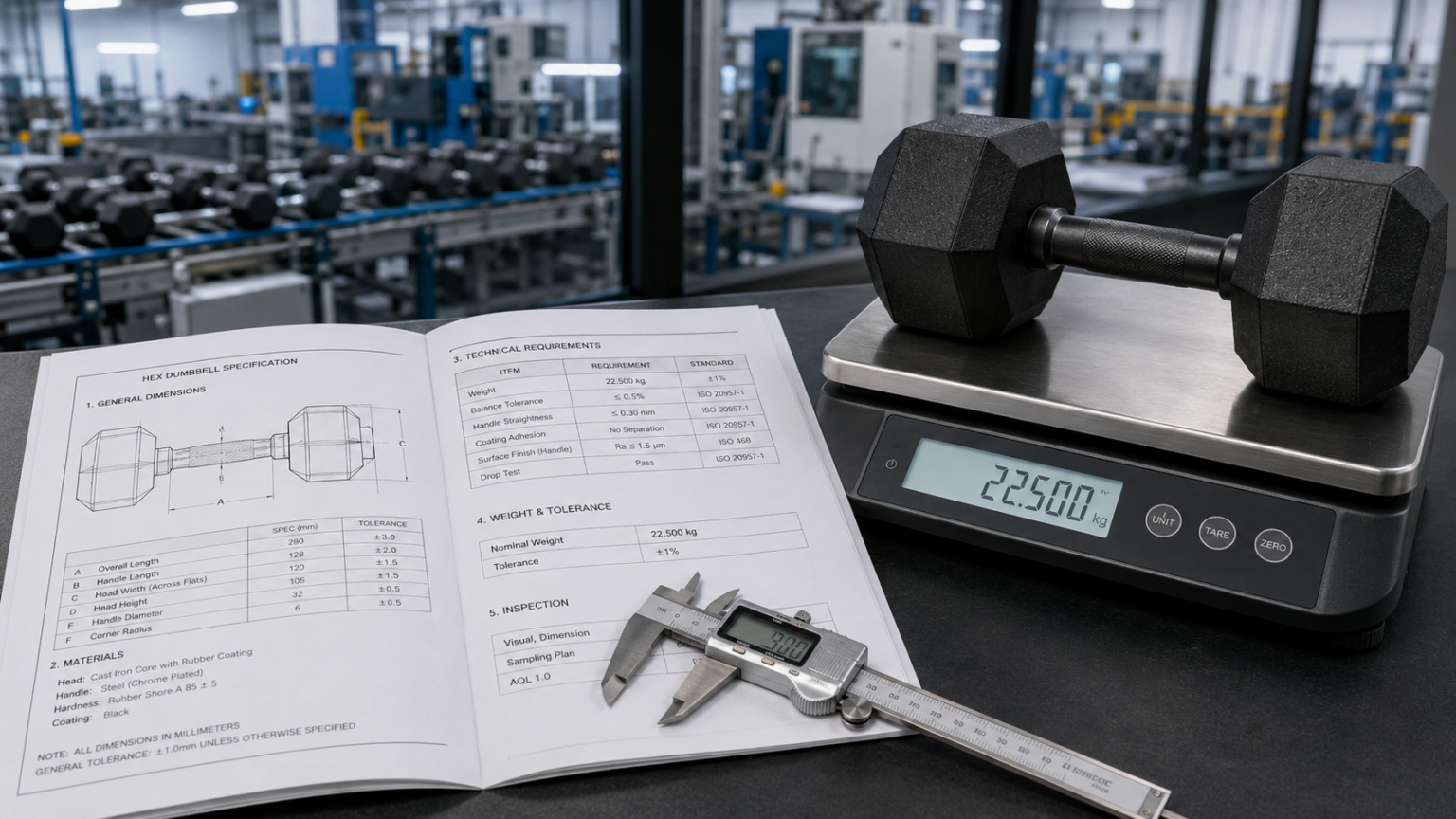
Step 3: Specify material parameters explicitly. For SBR: specify compound Shore A hardness (50–70 range), recycled content maximum (e.g., ≤30%), adhesion test standard (ASTM D3359 ≥4B), and UV resistance specification if applicable. For CPU: specify material density (typical range 1.2–1.4 g/cm³), Shore A hardness target (55–75), and surface consistency tolerance (visual inspection standard across 10% random production sample). For Chrome: specify plating thickness (minimum 5 microns chromium over 25 microns nickel), adhesion standard, and coverage specification for recessed areas.
Step 4: Align packaging with the coating’s transit risk profile. CPU-coated round dumbbells are more susceptible to surface contact marking during transit than rubber hex dumbbells — they require individual protective sleeves or foam separators in packaging to prevent contact marking between units. Including specific inter-unit protection requirements in packaging specifications prevents transit cosmetic damage that generates consumer complaints even when the structural product is perfect. Our dumbbell product range includes SBR rubber, CPU, and chrome finish options across weight ranges from 1 kg to 50+ kg, available for OEM specification across all three coating types.
Handle Specification: The Often-Overlooked Component
Surface finish discussions in dumbbell specification tend to focus on the head coating — rubber, CPU, or chrome — while underweighting the handle specification, which has an equally significant impact on user experience and product quality perception. The handle is the primary contact point between the user and the dumbbell; its diameter, knurl pattern, surface finish, and steel grade determine grip comfort, hand fatigue, and the tactile quality impression that users form when first picking up the product.
Handle Diameter: The Ergonomic Variable
Standard commercial dumbbell handles range from 28mm diameter for lighter weights (1–15 kg) to 32mm or 34mm for heavier weights (20 kg+). The diameter affects grip reach — the distance the fingers must span to close around the handle — which directly affects fatigue patterns in high-repetition training and the maximum grip force available to the user. For dumbbells sold to a general commercial population across a wide body size range, 30mm is often the ergonomic sweet spot: accessible to smaller hands without being slippery for larger ones.
For specialized products — competition-oriented bells, senior fitness accessories, or grip-training tools — handle diameter is a specification variable with genuine performance implications. Brands developing products for defined user populations should verify handle diameter appropriateness for the target user’s anthropometric range rather than defaulting to the manufacturer’s standard dimension.
Knurl Pattern: Grip and Texture
Knurling — the crosshatch pattern cut into the handle surface — provides the mechanical grip that allows secure dumbbell handling during high-intensity training. Knurl pattern is defined by its pitch (spacing between cuts), depth (how aggressively the pattern cuts into the steel), and coverage area (which portions of the handle are knurled). Aggressive knurling provides maximum grip security for heavy lifting but can cause hand abrasion in high-repetition contexts. Moderate knurling balances grip security and palm comfort across a wider range of exercises.
For OEM buyers specifying handle knurl, requesting a physical sample of the knurl pattern and testing it under the training conditions representative of the target user is the most reliable specification method. Photographs and written descriptions of knurl are inherently imprecise — the tactile and functional properties of knurling only reveal themselves in use. Including a knurl pattern approval step (separate from the overall sample approval) in the OEM specification process for premium dumbbell programs prevents the common disappointment of receiving handles that look correct in photographs but feel wrong in the hand.
UV Printing on Dumbbell Heads: An Emerging Customization Layer
One of the most commercially significant OEM innovations in premium dumbbell production over the past several years is UV printing directly onto CPU or urethane dumbbell heads. UV printing allows full-color, high-resolution graphic decoration — weight markings, brand logos, pattern graphics, and colorway elements — to be applied directly to the polyurethane surface with excellent adhesion and durability.
The UV printing advantage over traditional weight labels or embossed weight markings is primarily visual: printed graphics can achieve the fine-line precision and color vibrancy that stickers cannot replicate and that embossing cannot achieve in color. For brands building premium product lines where visual distinctiveness is part of the brand proposition, UV printing on CPU heads creates a level of product differentiation that is essentially impossible to replicate with standard rubber or plain PU coating.
From an OEM production perspective, UV printing adds a process step after the primary coating cure — the fully cured and assembled dumbbell is fed through a UV flatbed printing system that deposits and cures UV-reactive ink directly on the coating surface. The adhesion durability of UV printing on polyurethane is excellent when the surface is properly prepared and the ink formulation is appropriate for the specific polyurethane compound. Specifying UV printing adhesion testing as part of the sample approval process — applying tape pull adhesion tests and subjecting the printed sample to simulated cleaning chemical exposure — verifies that the printing will survive the commercial use environment before production is committed.
Our dumbbell range includes CPU-coated products with UV printing capability, allowing OEM buyers to specify custom weight markings, brand graphics, and colorway elements as part of their product differentiation program. Our ODM services support full customization of both the CPU coating specification and UV printing graphic design for brands seeking visually distinctive product lines.
Practical Considerations for Multi-Finish Dumbbell Sets
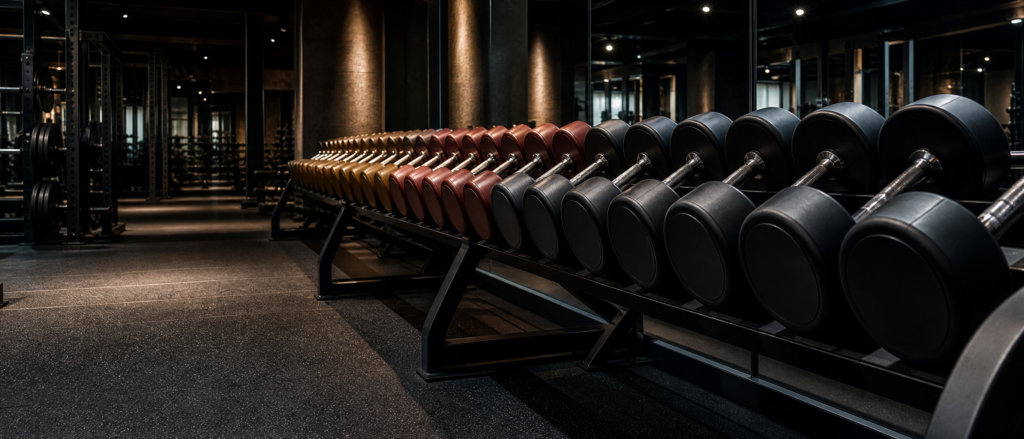
Many commercial gym operators and fitness brands offer or specify multi-finish dumbbell sets — combining rubber hex in the lower weight range (2–20 kg) with CPU rounds in the upper range (22.5–50 kg+). This tiered approach reflects the practical economics of dumbbell usage patterns: lighter weights are picked up, put down, and handled more frequently and with less control, while heavier weights are used more deliberately and benefit more from the superior grip and aesthetic of CPU coating.
For OEM programs producing multi-finish sets, specifying the finish transition point clearly — and confirming that the chrome handle diameter is consistent across both rubber and CPU head configurations for compatibility with standard storage racks — prevents the practical mismatches that create facility management frustrations. Dumbbell handle diameter standardization (typically 28mm–32mm for commercial handles) ensures that holders, racks, and dumbbell trees accept products across both finish types without modification.
Frequently Asked Questions
What is the main difference between CPU and rubber dumbbell coatings?
CPU (cast polyurethane) is a synthetic polymer coating that is odorless, UV-stable, abrasion-resistant, and highly durable under commercial use conditions. Rubber (SBR) is a vulcanized natural or synthetic rubber coating that provides excellent floor protection and noise reduction at lower cost, but can develop a new-product odor, degrades with UV exposure, and shows surface wear faster in heavy commercial use. CPU typically costs 1.7–2.2× more than rubber per unit but lasts 2–3× longer in commercial environments.
Is CPU or TPU better for commercial gyms?
CPU is the superior choice for commercial gym environments. CPU offers better grip than TPU, as the denser material creates a more textured surface. TPU dumbbells typically last around 4 years, shorter than CPU dumbbells. CPU’s higher density, better grip texture, superior UV resistance, and longer commercial lifespan justify its higher unit cost for any facility with heavy daily use and long equipment lifecycle expectations.
Do urethane dumbbells smell?
No — one of CPU/urethane coating’s most commercially significant advantages over rubber is that it is essentially odorless. Rubber dumbbells, particularly when new, emit a characteristic rubber odor that can be noticeable in enclosed spaces and is a consistent first-impression negative for premium commercial environments. CPU coating produces no comparable odor, which is one of the primary reasons hotel gyms, boutique studios, and premium commercial facilities prefer CPU over rubber.
Which dumbbell coating is best for home gyms?
For most home gym applications — 1–2 users, moderate use frequency (3–5 days per week), and typical 5–10 year product lifecycle expectations — high-quality SBR rubber-coated hex dumbbells provide excellent value. The odor dissipates with use and ventilation, the floor protection is superior to CPU (softer impact absorption), and the cost savings relative to CPU are substantial. Home gym users who prioritize aesthetics, train frequently, or have UV-exposed spaces may find CPU coating worth the premium, but it is not required for the typical home use context.
How does chrome dumbbell plating compare to rubber or CPU?
Chrome plating is a traditional metallic finish that provides excellent aesthetics and hygiene properties in light-use studio environments but lacks the floor protection, impact resistance, and surface durability of rubber or CPU coatings. Chrome is appropriate for dumbbells in the 1–15 kg range used in studio settings where they are placed (not dropped), and where the visual aesthetic of the studio environment requires a clean metallic look. Chrome is not appropriate for heavy dumbbells in high-use commercial settings where durability and floor protection are primary requirements.
Conclusion
Choosing the right dumbbell surface finish is a specification decision that determines product durability, user experience, production cost, and market positioning simultaneously. SBR rubber coating serves the cost-competitive home and entry commercial tiers with proven performance. CPU coating serves the premium commercial tier where longevity, odor performance, and aesthetic consistency justify the price premium. TPU provides a useful intermediate option. Chrome serves specific studio aesthetic applications in light weight ranges.
Each coating type requires distinct OEM manufacturing infrastructure, different quality specification parameters, and different packaging solutions — making the coating choice one of the earliest and most consequential decisions in any dumbbell OEM program. If you are developing or specifying a dumbbell product line and want to discuss the right coating specification for your target channel and price architecture, our engineering team is available to review your requirements and recommend the coating specification that best serves your market.