Ask a competitive powerlifter why they spend three to ten times more on calibrated weight plates than on standard cast iron or rubber bumper alternatives, and the answer is immediate and categorical: because the weight on the bar must be exactly what it says it is. Not within a pound. Not within 1%. Calibrated weight plates hold a tolerance of ±10 grams — approximately the weight of two US nickels — across plates from 1kg to 25kg. Standard training plates typically hold ±1%, which means a pair of 25kg standard plates could collectively vary by up to 500 grams from their stated weight. In a competition setting where a lift succeeds or fails to set a record by measured kilograms, that difference is the difference between a world record and a near-miss.
But calibrated plates are not only for competitive athletes. The precision engineering that produces them, the material choices required to achieve and maintain that tolerance, and the manufacturing processes that separate calibrated plates from standard alternatives are all commercially significant for brands and OEM buyers developing weight plate product lines. Understanding precisely what “calibrated” means — and what it costs, requires, and delivers — is essential for specifying weight plates correctly across different market channels and positioning them appropriately in product line architecture.
The Tolerance Hierarchy: From Standard to Competition Specification
Weight plate precision is defined primarily by weight tolerance — how close the actual mass of the plate is to its marked value — and secondarily by dimensional tolerances: collar opening diameter, outer diameter, and thickness consistency across the plate face. Understanding the full tolerance hierarchy allows OEM buyers and brands to position products accurately across market segments and specification levels.
Standard Training Plates: ±1–3% Tolerance
Standard cast iron or rubber-coated training plates — the workhorses of commercial gym floors worldwide — are produced to a tolerance of ±1–3% of marked weight. For a 25kg plate, this means the actual mass could be anywhere from 24.25kg to 25.75kg and still fall within standard production specification. For general fitness training where the objective is progressive overload against a relative target, this tolerance is entirely adequate: the lifter is training with “roughly 25kg” and the cumulative training stimulus is what matters, not the exact load to the gram.
Standard plates are produced primarily through casting — molten cast iron (gray iron for standard plates, ductile iron for higher-grade alternatives) poured into sand molds and allowed to solidify. The inherent variability in the casting process — mold dimensions, pour temperature, metal composition batch variation, and cooling rate — produces natural weight variation across a production run. Attempting to hold standard casting to ±10g tolerance without post-cast machining is not practical; the process variation exceeds the tolerance requirement.
Olympic Rubber Bumper Plates: ±0.8% IWF Standard
The International Weightlifting Federation (IWF) specifies a weight tolerance of ±0.8% for rubber bumper plates used in sanctioned competition. XMARK’s competition training plates exceed the IWF weight tolerance of ±0.8%, offering accuracy within ±10 grams. At 25kg, ±0.8% represents a tolerance of ±200g — significantly tighter than standard casting tolerance but much looser than calibrated steel plate standards. This tolerance level is achievable with careful rubber compound weighing and mold filling procedures without requiring post-production machining, which is why rubber bumper plates can achieve semi-precision at reasonable manufacturing cost.
Competition Bumper Plates: ±0.05% or ±10g
Competition bumper plates are made to IWF standards with tighter weight tolerances of ±0.05%, and a steel center hub for low bounce. At 25kg, ±0.05% represents ±12.5g — effectively the same as the ±10g specification used for calibrated steel plates. Competition-grade bumper plates achieve this precision through a combination of careful rubber compound preparation, controlled mold filling, post-cure weight measurement, and selective use of lead or steel fine-adjustment inserts to bring individual plates within specification where the initial casting falls short.
Calibrated Steel Plates: ±10g — The Precision Standard
Calibrated plates are cast iron or steel plates machined to an extremely tight weight tolerance — within ±10 grams per plate. For powerlifting competition, where the total weight on the bar determines whether a lift counts and records are set to the kilogram, this precision matters. At every weight denomination from the lightest change plates to the heaviest 25kg competition discs, calibrated plates are individually verified against this tolerance before approval for sale.
The precision fit of calibrated plates — specifically the 50mm center hole diameter machined to ±0.1mm tolerance — ensures a snug fit on competition barbell sleeves, with uniform width allowing more weight to be loaded on the bar. This collar opening precision is as important as weight precision for calibrated plates: a loose collar fit produces audible rattling on the bar during lifts and can affect the balance and feel of the loaded barbell under dynamic conditions.
The Manufacturing Process Gap: Why Calibrated Plates Cost More
The price premium commanded by calibrated weight plates — typically three to eight times the per-kilogram cost of equivalent-weight standard cast iron — is not purely a market positioning artifact. It reflects genuine additional manufacturing cost at multiple stages of the production process that are necessary to achieve and maintain ±10g precision.
Material Selection: Steel vs. Cast Iron
The first cost differential arises at the material stage. Standard weight plates use gray cast iron — inexpensive, easy to cast, and adequately dense for standard training applications. Calibrated powerlifting plates typically use machine-quality steel — specifically, a steel grade with consistent, tightly controlled composition that machines cleanly without chipping, tearing, or producing excessive tooling wear.
Steel’s higher tensile strength allows thinner plate profiles than cast iron at equivalent weight, which is commercially important for competition powerlifting: thinner plates allow more total weight to be loaded onto a standard barbell sleeve. With an ultra-thin profile ranging from 0.17″ to 0.92″ depending on weight, steel calibrated plates let you load more on the bar — helping push limits in training and competition. This thin-profile advantage requires steel rather than the more brittle cast iron, adding material cost but delivering a performance advantage that competition-oriented buyers value and will pay for.
Machining vs. Casting: The Process Cost Differential
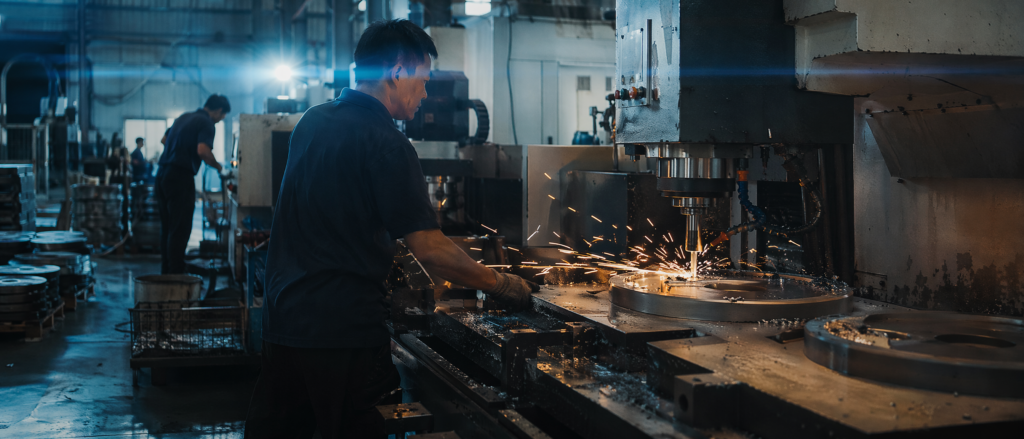
The fundamental manufacturing difference between calibrated and standard plates is the production process. Standard plates are cast and then surface-finished — a relatively fast, high-volume process where the casting mold determines the primary dimensional and weight characteristics of the plate. Calibrated steel plates require CNC machining after initial forming: the steel disc is shaped to approximate dimensions and then precision-machined on multiple faces to achieve the exact weight, collar opening diameter, and outer diameter specified.
CNC machining adds significant time and cost per plate: machine setup time, tooling wear and replacement cost, machine time per unit, and the coolant and chip management required for machining steel. A standard cast iron plate might take 8–12 minutes of total processing time from casting to finishing; a CNC-machined calibrated steel plate might require 25–40 minutes of precision machining time per unit, with additional time for individual weight verification. This 2–3× increase in direct production time is the primary driver of calibrated plates’ higher manufacturing cost.
Individual Weight Verification and Fine Adjustment
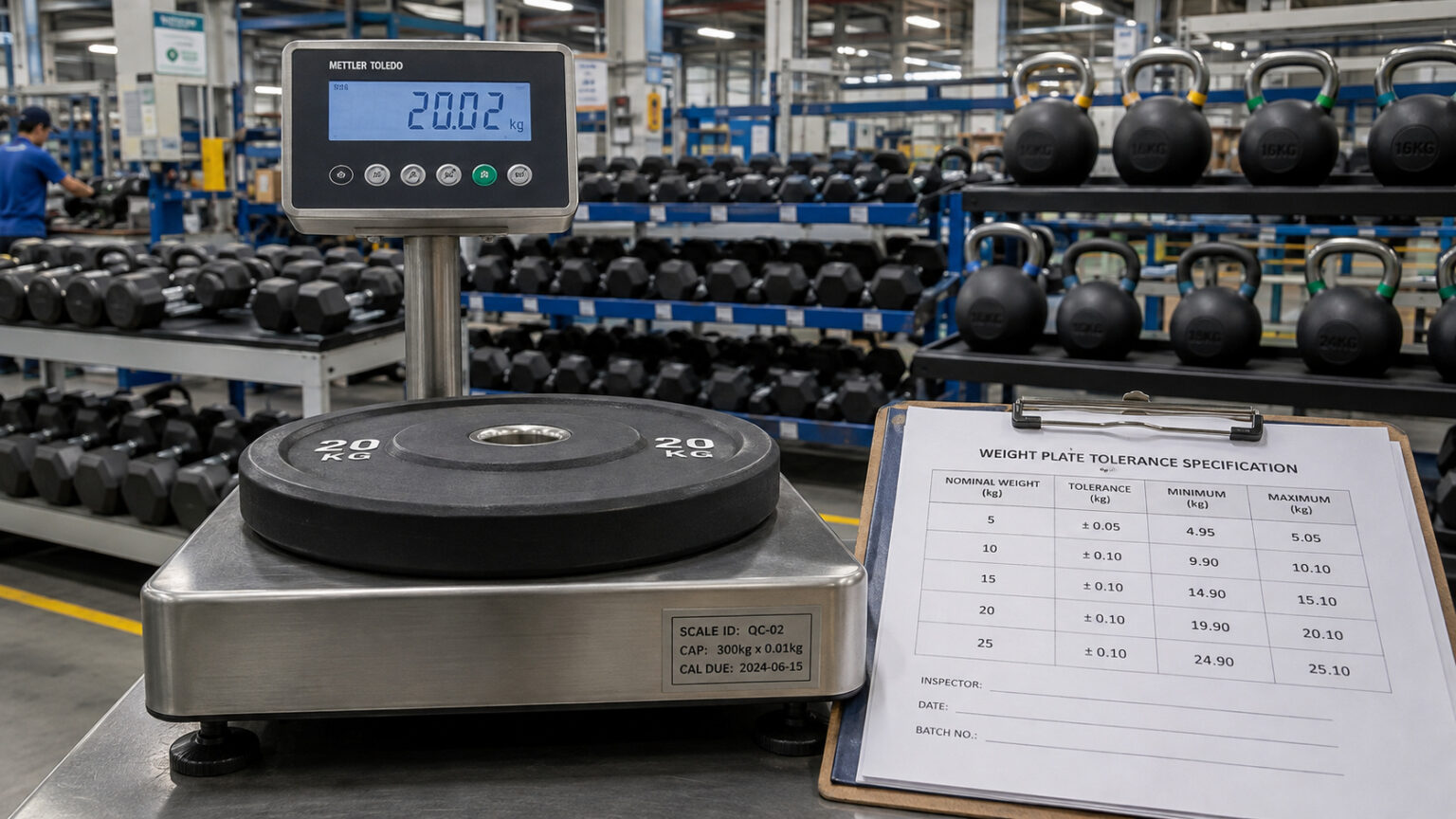
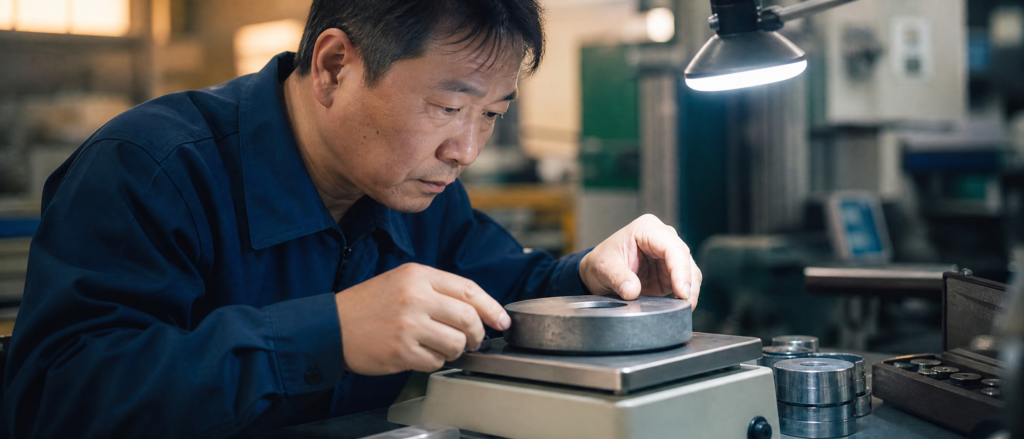
After machining, every calibrated plate must be individually weighed on a certified precision scale — traceable to national measurement standards — and compared against the ±10g tolerance window. Plates that fall within tolerance are approved. Plates that fall outside require fine adjustment.
The fine adjustment process for steel calibrated plates typically involves small ports or holes pre-drilled into the plate body during machining. Lead plugs or brass inserts of precisely calculated mass are pressed into these ports to add the specific mass needed to bring a slightly underweight plate within tolerance. The use of lead adjusters — rather than simple material removal or addition to the plate surface — is the standard industry approach for precision weight adjustment because lead’s high density allows very small volume additions to produce the needed mass increment.
A lead block inside brass plugs is inserted into a designated hole on the inside of the plate to precisely adjust the weight. This fine adjustment step is unique to calibrated plate production — standard plates do not receive individual weight verification or adjustment because their tolerance is achievable through casting process control without it.
Surface Finishing: The Quality Signal
Calibrated plates command premium prices partly on the basis of their superior surface finishing, which signals precision manufacturing to buyers even before they read the tolerance specification. Common premium finishes for calibrated steel plates include:
- Electroless nickel plating: Electroless nickel plating provides a uniform coating across the entire plate and offers superior durability compared to traditional finishes. It is more durable than powder coat or hard chrome. The process deposits an even nickel layer without electrical current — producing particularly uniform coating even on complex geometries like the inner face of the collar opening.
- Hard chrome plating: Produces a high-gloss, hard metallic surface with excellent wear resistance. More expensive than electroless nickel but provides a distinctive premium aesthetic often used by boutique strength equipment brands.
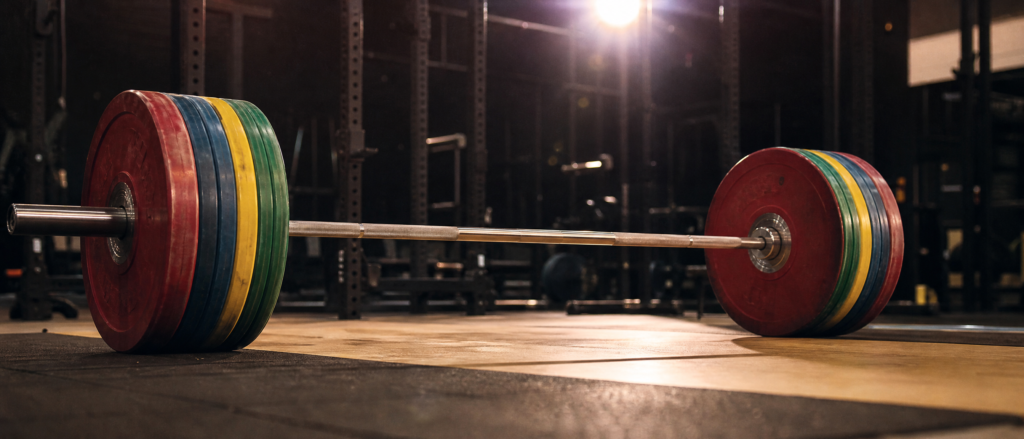
- Powder coat with color-coded bands: Used in competition plates for easy weight identification, powder coat with IPF or IWF standard color coding (25kg red, 20kg blue, 15kg yellow, 10kg green) provides the visual language of competition while delivering adequate corrosion protection at lower surface finishing cost than nickel or chrome.
| Plate Type | Weight Tolerance | Collar Opening | Material | Production Process | Relative Cost Index |
|---|---|---|---|---|---|
| Standard cast iron (training) | ±1–3% | ~51mm (loose) | Gray cast iron | Sand casting + paint | 1.0× |
| Rubber-coated iron (training) | ±2–3% | ~51mm | Cast iron + SBR rubber | Casting + rubber overmold | 1.3–1.6× |
| Standard rubber bumper | ±1–2% | 50.6mm | Cast iron core + virgin/recycled rubber | Core casting + rubber vulcanization | 1.8–2.5× |
| IWF rubber bumper (competition) | ±0.8% (IWF) to ±10g | 50.5mm ±0.1mm | Iron core + virgin rubber | Precision casting + calibration | 2.5–4.0× |
| Calibrated steel plate (IPF) | ±10g | 50.4mm ±0.1mm | Machine-quality steel | CNC machining + individual verification | 4.0–8.0× |
Federation Standards and Competition Approval
The commercial value of calibrated plates in the competition and competition-preparation market is amplified by federation approval programs — formal certification processes through which the IPF (International Powerlifting Federation) and IWF (International Weightlifting Federation) verify that specific plate models from specific manufacturers meet their competition standards.
IPF Approval for Powerlifting
The IPF maintains a list of approved competition equipment — including plates — that may be used in IPF-sanctioned powerlifting competition. Approval requires that the manufacturer submit plates for independent testing against IPF specifications: weight tolerance (±10g), collar opening (50mm ±0.1mm), outer diameter, and thickness. Approved models are listed on the IPF equipment list, and events using non-approved equipment are not IPF-sanctioned.
IPF approval carries significant commercial value for manufacturers: clubs affiliated with IPF national federations will purchase approved plates for training and competition facilities, providing a recurring procurement base that is unavailable to non-approved manufacturers. For OEM buyers developing competition plate lines, confirming IPF approval process requirements and timeline — and budgeting for the approval application cost — before production investment is an essential commercial planning step.
IWF Technical Regulations for Weightlifting
The IWF Technical and Competition Regulations define the specifications for rubber bumper plates used in IWF-sanctioned Olympic weightlifting competition. Key specifications include: 450mm diameter across all weights from 10kg to 25kg (ensuring consistent bar height for pulling movements regardless of plate weight), ±0.1% weight tolerance for the heaviest plates, color-coding by weight (matching IPF standards for the main competition weights), and a 50mm center bore. Rubber compound specifications include minimum durometer (hardness) requirements — a durometer reading of 90 and above ensures a consistent dead blow, minimizing the bounce commonly found in lower quality bumpers.
The consistent 450mm outer diameter across all competition plate weights is a design requirement with direct ergonomic implications: this uniform diameter keeps the bar at a consistent height from the floor across all weight configurations, which matters for pulling mechanics. When the bar height changes as weight is added (as it does with non-standard-diameter plates), the pulling mechanics of the snatch and clean are altered — affecting technique consistency and potentially increasing injury risk for elite athletes optimizing their starting positions.
The Physics of Why Plate Accuracy Matters: A Training Science Perspective
Understanding why calibrated plates command a premium price requires understanding not just the manufacturing difference but the training science rationale that makes weight accuracy genuinely consequential for certain user populations.
Percentage-Based Programming and the Accuracy Requirement
Modern strength training programming — particularly for powerlifting and weightlifting — is built around percentages of one-repetition maximum (1RM). A coach might prescribe a training block at “85% of 1RM for 3 sets of 3 reps,” expecting the athlete to load 85% of their best competitive lift with high precision. This programming methodology is only as valid as the accuracy of the weight being lifted: if the plates vary by ±1%, then “85% of 1RM” actually means “84–86% of 1RM, depending on which plates happen to be loaded,” which introduces a systematic training variability that accumulates meaningfully across weeks and months of training.
For elite athletes training at high percentages of their maximal capacity, this variability matters clinically: the difference between 84% and 86% of a 250kg squat is 5kg of additional load on the bar — the equivalent of a full change plate — which represents a meaningfully different training stimulus and recovery demand. Percentage-based programming with inaccurate plates effectively introduces random variation into training prescriptions that coaches have designed to be precise.
Competition Carryover and the Training Environment Argument
Calibrated plates ensure the weight is accurate to within ±10g, so training at home or in the gym matches the exact standards used in powerlifting competitions. This competition carryover argument matters at the elite level, where the tactile feel and mechanical behavior of the barbell under load — affected by the exact loading and distribution of plates on the sleeves — is part of the competitive preparation. Athletes who train exclusively with standard plates and then lift with calibrated competition plates may experience subtle differences in bar feel that compound into performance variability on the platform.
The IWF’s requirement that competition venues use IWF-approved plates with consistent 450mm diameter across all weights reflects the same logic applied to the pulling position: athletes who train with non-standard-diameter plates that vary the bar height as weight is added cannot develop the consistent starting position geometry that competition success requires. The uniform diameter keeps the bar at a consistent height from the floor across all weight configurations, which matters for pulling mechanics.
Tracking Progress with Precision
For coaches and athletes using advanced performance tracking — monitoring strength development curves, rate of force development changes, and long-term progressive overload across training cycles — weight plate accuracy affects the validity of the performance data being collected. A strength gain of 2.5kg recorded with ±1% tolerance plates might represent a genuine 2.5kg strength gain or might represent a tolerance variation in the plates used across two different test sessions. Calibrated plates eliminate plate weight variation as a confounding variable in performance tracking, making the data collected meaningfully more reliable.
This data validity argument is increasingly relevant as strength and conditioning practice adopts more systematic data collection — velocity-based training systems, barbell tracking devices, and longitudinal performance databases all benefit from weight accuracy that calibrated plates provide and standard plates do not.
Density, Profile, and the Bar Loading Advantage
Beyond tolerance precision, calibrated steel plates offer a physical advantage over cast iron alternatives that is commercially significant for serious strength training facilities: their thin profile allows more total weight to be loaded onto a standard barbell, which matters for athletes whose competition totals approach or exceed what can be physically fit onto a standard bar with conventional plates.
A standard cast iron 25kg plate might be 48–55mm thick, depending on casting geometry and surface treatment. A precision-machined steel calibrated 25kg plate is typically 25–35mm thick — 30–50% thinner for the same mass, because steel’s higher density than cast iron allows equivalent weight in less volume. For a super-heavyweight powerlifter attempting a world-record squat or deadlift, the difference between fitting 400kg or 440kg onto a standard 2.2-meter barbell may be determined by whether the plates on the bar are conventional cast iron or thin-profile calibrated steel. This “more weight in less space” property is unique to calibrated steel plates and cannot be replicated by any rubber bumper plate alternative at equivalent weight.
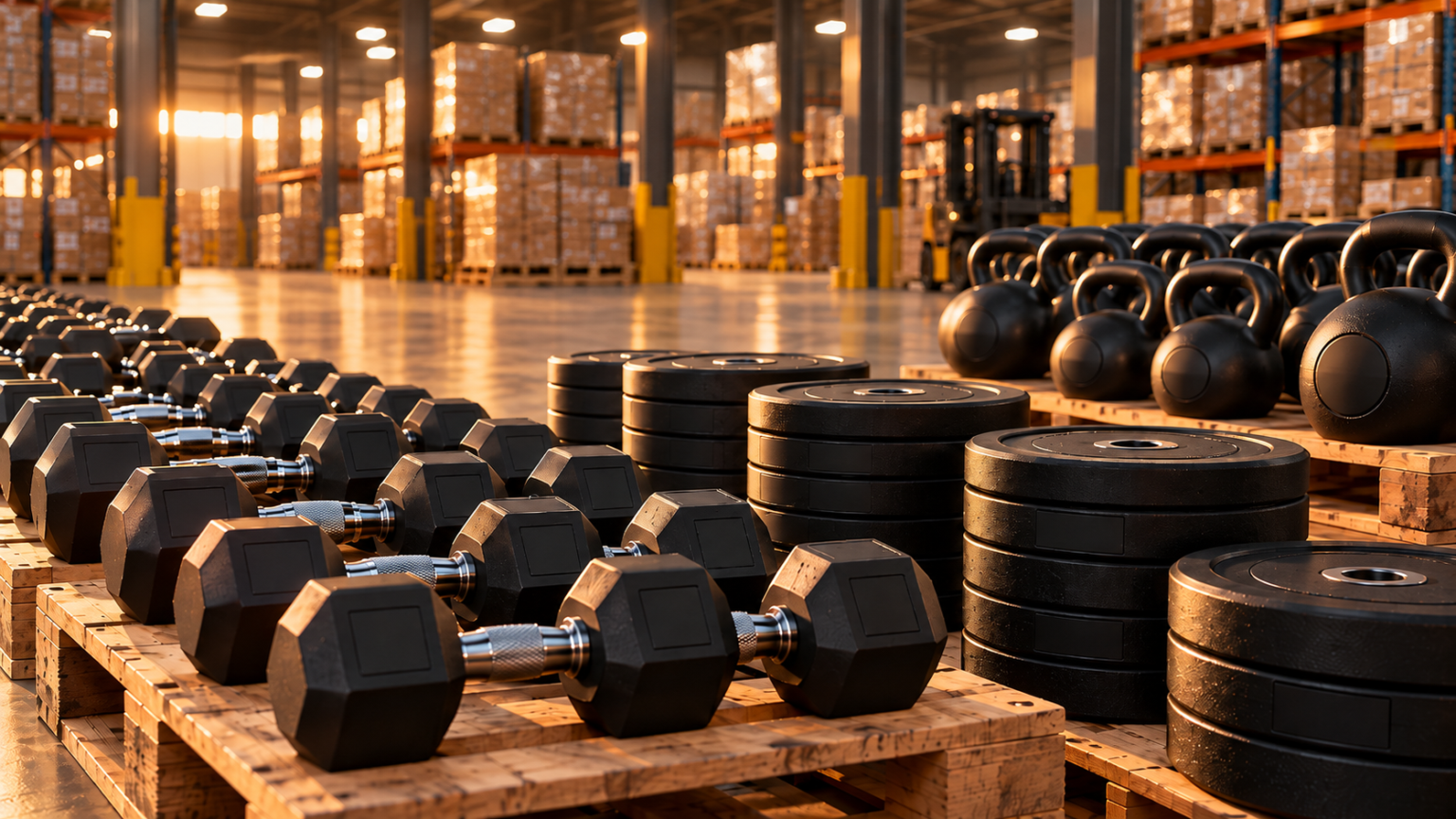
The full range of weight plates we produce — from standard cast iron training plates through rubber bumpers to calibrated competition steel — reflects the genuine performance and market-positioning differences between these product categories. Each category serves a distinct buyer population with distinct requirements that the specification choices built into each product must address.
The Market Segmentation Case: Who Buys Calibrated Plates
Understanding who buys calibrated plates — and why — is essential for brands considering whether to include them in a product line and how to position them commercially.
Powerlifting Clubs and Affiliated Gyms
IPF-affiliated powerlifting clubs are the primary institutional buyer of calibrated steel plates. These facilities require IPF-approved plates for competitive lifters training for meets, and often purchase multiple sets to outfit multiple platforms. Purchase decisions are driven primarily by IPF approval status, weight accuracy reputation, and durability — aesthetics are secondary.
Strength Performance Centers and University Athletics
High-performance strength programs — university athletics departments, national training centers, and serious strength coaching facilities — purchase calibrated or near-calibrated plates to ensure training weight accuracy. Coaches who design training programs in precise percentage increments of 1RM require actual weight certainty to make those percentages valid. A 1% variation in plate weight makes a 1RM calculation effectively meaningless as a programming tool.
Premium Home Gym Enthusiasts
The home gym market’s premium tier includes a growing segment of serious strength athletes and fitness enthusiasts who invest in competition-grade equipment for personal training. For competitive powerlifters, weight accuracy matters in competition — calibrated plates ensure that training at home matches the exact standards used in competition. This segment is willing to pay competition-plate premiums for the certainty and performance feel of calibrated equipment, even without the competition mandate that drives club purchases.
The OEM Opportunity
For OEM buyers evaluating weight plate product line architecture, calibrated plates represent a high-margin, lower-volume complement to the standard plate volume business. The manufacturing cost is higher — calibrated plates require CNC machining capability and individual verification processes not standard in all OEM factories — but the market price premium is disproportionately high relative to the cost increment. Brands that develop an IPF-approved calibrated plate line alongside standard training plate offerings can serve both the volume commercial market and the precision competition market from a single manufacturing relationship. Our calibrated plate product reflects this engineering approach, and our OEM/ODM services support custom-branded calibrated plate programs for brands targeting the competition and performance training market.
OEM Specification Framework for Weight Plates
For brands developing or sourcing weight plate product lines, the following specification framework aligns production specifications with target market requirements across the full precision hierarchy:
Standard Training Plate Specification
Weight tolerance: ±2% acceptable, ±1% preferred for commercial gym quality. Collar opening: 51mm ±0.5mm. Material: gray cast iron. Surface: powder coat or rubber coating. Acceptable production process: sand casting. OQC: batch sampling, no individual weighing required. Target market: commercial gyms, home gym, institutional procurement.
Olympic Rubber Bumper Plate Specification
Weight tolerance: ±0.8% (IWF minimum) to ±1% acceptable. Collar opening: 50.6mm ±0.2mm. Rubber compound: virgin rubber preferred for competition applications; recycled rubber acceptable for training applications with quality compound specification. Durometer: 88–95 Shore A for competition; 75–88 for standard training. Surface: full rubber vulcanization with stainless steel or chrome center hub. OQC: weight spot-check at defined sample rate.
Calibrated Steel Plate Specification (IPF/IWF Competition)
Weight tolerance: ±10g per plate. Collar opening: 50.4mm ±0.1mm. Material: machine-quality steel (specify grade). Production process: CNC machining to final weight and dimensions. Individual weight verification: 100% of plates weighed on certified scale traceable to national standard. Fine adjustment: lead or steel plug inserts in pre-drilled adjustment holes where required. Surface: electroless nickel, hard chrome, or quality powder coat with IPF/IWF color coding. Diameter (main plates): 450mm ±1mm.
Frequently Asked Questions
What is the weight tolerance of calibrated plates?
Calibrated weight plates hold a tolerance of ±10 grams — equivalent to approximately the mass of two US nickels. This applies to each individual plate at every weight denomination from the lightest change plates through the heaviest 25kg competition discs. This is the standard specification adopted by both the IPF (International Powerlifting Federation) and the IWF (International Weightlifting Federation) for competition-approved equipment.
Why are calibrated plates so much more expensive than standard weight plates?
Calibrated plates require CNC machining rather than standard casting — adding 2–3× the direct production time per unit. They also require individual weight verification (every plate weighed on a certified precision scale) and fine adjustment using precision mass inserts where needed. The combination of machine-quality steel material, precision machining, and individual verification produces a cost structure 4–8× higher than standard cast iron plates at equivalent weight.
What is the IWF standard collar opening diameter for competition plates?
The IWF standard collar opening for competition bumper plates is 50.5mm with tight dimensional tolerance (±0.1mm). IPF calibrated steel plates use a 50.4mm collar opening to the same tight tolerance. This precision collar opening ensures a snug, rattlefree fit on competition barbells with 50mm sleeves — a performance and safety requirement for competition use that standard plates with ~51mm loose collar openings do not provide.
Can calibrated steel plates be used for Olympic weightlifting?
IPF calibrated steel plates are designed specifically for powerlifting — where weights remain on the floor or rack for static lifts. They are not suitable for Olympic weightlifting because they lack the rubber outer coating required for safe dropping from overhead positions (the snatch and clean and jerk). Olympic weightlifting competition uses rubber bumper plates — either standard rubber bumpers for training or IWF-approved competition bumpers that meet the IWF’s tighter tolerance and diameter specifications.
How do I verify that calibrated plates I’m considering actually meet ±10g tolerance?
Request weight calibration certificates for your specific plates — documentation showing that each plate was individually weighed on a certified scale traceable to national measurement standards, with the actual measured weight recorded. Reputable calibrated plate manufacturers provide this documentation. For brands purchasing OEM calibrated plates, including a 100% individual weighing requirement in the production specification and requiring calibration records to accompany each shipment provides independent verification that the specification is being met in production.
Conclusion
The price premium of calibrated weight plates over standard cast iron alternatives is not a marketing artifact — it reflects genuine manufacturing investment in precision machining, individual verification, and material selection that produces a physically different product with quantifiably superior weight accuracy. For competitive powerlifters and serious performance training programs, ±10g precision is not a luxury: it is the specification that makes training weights valid as programming inputs and ensures competition performance predictions are accurate.
For OEM buyers developing weight plate product lines, calibrated plates represent a high-margin, technically demanding product category that rewards manufacturing investment with price premium and brand positioning advantages unavailable in the commodity plate market. If you are developing a competition plate program or evaluating OEM options for calibrated plate production, our team is available to discuss specifications, certifications, and production partnership for the full range of weight plate product categories.