If you are evaluating which wellness market segments represent the most compelling growth opportunity over the next five to ten years, the answer is increasingly clear: senior fitness. The convergence of demographic inevitability, institutional investment, healthcare cost imperatives, and a fundamental cultural shift in how older adults approach aging has created a market whose structural growth characteristics outperform the broader fitness industry — and whose commercial implications for equipment brands and distributors are only beginning to be recognized at scale.
This article examines why the senior fitness market is positioned as the next major growth category in wellness, what is driving it beyond simple demographic math, which commercial channels are generating the most actionable procurement demand, and what fitness equipment brands and OEM buyers should understand about the product requirements that distinguish this market from conventional fitness equipment categories.
The Numbers: A Market Growing Faster Than Fitness Overall
The scale of the active aging fitness opportunity is best understood through the specific market research that tracks this segment distinctly from general fitness equipment. According to Growth Market Reports, the active aging fitness market reached USD 14.3 billion in 2024 and is projected to grow at a CAGR of 7.8% through 2033, reaching USD 28.1 billion — a near-doubling of market size in under a decade. This growth rate is meaningfully higher than the 5.3% CAGR projected for the broader fitness equipment market, reflecting the structural tailwinds that are unique to the senior wellness segment.
The demographic basis for this growth is not projection — it is already observable in current behavior. Senior gym membership participation has grown by 231% over the past two decades, with seniors now accounting for approximately 18% of total US gym memberships. More significantly, according to the 2023 IHRSA US Health and Fitness Consumer Report, adults 65 and older now visit gyms and studios more often than any other age group. This is not a lagging indicator of a future trend — it is current behavior from the most economically stable and time-abundant demographic in the fitness market.
At the institutional level, the numbers are equally compelling. The seniors (55+) segment is the quickest growing segment in US health and fitness clubs, set to experience 7.8% CAGR growth between 2026 and 2035, driven by 73 million Americans entering their 60s and 70s and insurance incentives such as Medicare Advantage programs that include fitness center access through the SilverSneakers program, serving 18+ million qualified members.
What Is Actually Driving Senior Fitness Growth: Beyond Demographics
The demographic inevitability argument for senior fitness — more elderly people means more demand for senior wellness products — is real but insufficient as a complete explanation. The more precise drivers of current and near-term growth are behavioral, institutional, economic, and clinical in nature. Understanding each provides a more actionable picture of where the market is actually heading.
Driver 1: The Active Aging Cultural Shift
The most significant single driver of senior fitness market growth is a fundamental cultural shift in how aging adults define their relationship with physical activity. The Baby Boomer generation — now entering their 60s and 70s — grew up with fitness as a lifestyle category rather than a medical prescription. Many have maintained active fitness habits across their adult lives and are unwilling to abandon them as they age. They are instead seeking fitness environments and products that accommodate their changing physical needs while preserving the training culture they have been part of for decades.
This cultural orientation has several commercial implications. First, the “senior fitness” label is increasingly rejected by the target consumer. Research from 2024 found that programs labeled “low intensity,” “functional,” or “active aging” consistently attract more participants than those called “senior fitness.” Equipment brands and distributors targeting this market need to position their product lines around capability and independence rather than limitation. Second, these consumers are purchasing decision-makers — not passive recipients of institutionally procured equipment. They influence facility operators’ buying decisions through their preferences and their willingness to leave facilities that do not meet their needs.
Driver 2: Healthcare Cost Economics and Insurance Integration
The economic case for senior fitness investment has been formally recognized by the healthcare system in ways that create institutional demand beyond what individual consumer behavior alone would generate. Medicare Advantage plans in the United States increasingly include fitness facility access as a covered benefit — SilverSneakers alone connects over 18 million eligible seniors to more than 16,000 gym and fitness studio locations. This insurance integration creates a public-private demand subsidy that effectively lowers the cost barrier to senior gym participation at scale.
The healthcare cost logic driving this integration is compelling: regular physical activity in older adults demonstrably reduces hospitalizations, falls, chronic disease progression, and long-term care costs. For insurers managing healthcare expenditure for aging populations, subsidizing gym memberships is economically rational when the alternative is higher-cost acute and long-term care. As Medicare and private insurance programs continue to expand fitness benefits for seniors, the institutional infrastructure supporting senior fitness facility development expands with it — creating sustained procurement demand for appropriate equipment.
Driver 3: Senior Living and Assisted Living Facility Investment
Senior living communities — independent living, assisted living, and continuing care retirement communities (CCRCs) — are investing heavily in fitness amenities as competitive differentiators in an increasingly supply-rich market. Prospective residents evaluate fitness facilities alongside dining options, social programming, and location in their community selection decisions. Operators who offer well-equipped, accessible, and professionally programmed fitness centers consistently outperform peers in occupancy rates and rental pricing power.
The procurement cycle in this channel differs meaningfully from the consumer or commercial gym market: institutional buyers procure in larger quantities (20–50 machine sets for a large CCRC), specify to clinical or regulatory standards (accessibility, ergonomics, safety features), and operate on multi-year equipment lifecycle plans with defined replacement schedules. For fitness equipment brands and distributors with the product specifications and institutional sales capabilities to serve this channel, the senior living market represents a significant B2B revenue opportunity that is insulated from the consumer spending volatility that affects retail channels.
Driver 4: Clinical Integration and Physical Therapy Channels
The integration of fitness-based interventions into physical therapy and clinical rehabilitation protocols has expanded the equipment procurement channel for senior wellness products into the healthcare system itself. Evidence-based rehabilitation programs for back pain, orthopedic recovery, stroke rehabilitation, and fall prevention now routinely incorporate resistance training equipment — selectorized machines, resistance bands, soft weights, and balance trainers — that is specified by clinical criteria rather than consumer preference.
Physical therapy clinics, hospital rehabilitation departments, and outpatient orthopaedic practices represent a procurement channel that is underserved by conventional fitness equipment distribution. Clinical buyers require specific features — adjustable resistance systems with precise calibration, accessible entry and egress geometry for patients with mobility limitations, non-slip surfaces and stability support, and durability for high-frequency clinical use. The Alexia senior fitness product line was specifically developed to meet these clinical and institutional specifications, recognizing that the clinical channel requires a distinct product tier beyond what consumer-oriented senior fitness equipment delivers.
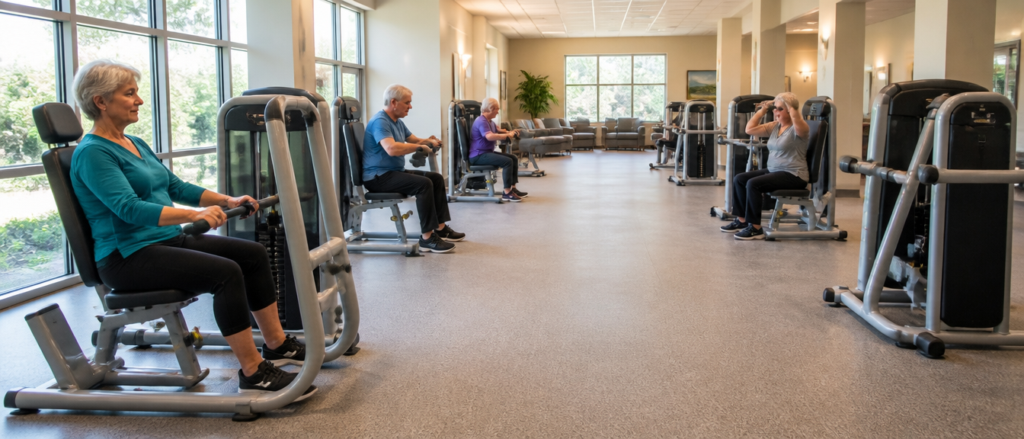
What Distinguishes Senior Fitness Equipment From Conventional Equipment
Understanding what makes fitness equipment genuinely appropriate for senior users — as opposed to simply marketing conventional equipment to older adults — is essential for brands and distributors entering this market. The product requirements are specific, and they create technical differentiation criteria that separate credible senior wellness offerings from repurposed conventional equipment.
Resistance Profile and Load Management
Senior fitness equipment should provide effective resistance training at lower absolute loads than conventional commercial equipment, with a resistance profile that is smooth, progressive, and controllable throughout the range of motion. Selectorized machines designed for senior use typically offer weight stack increments of 2–5 lbs (versus 10–15 lbs increments on conventional commercial machines), allowing users to progress resistance in small, safe steps. The resistance curve should be accommodating — not uniform or linear — reflecting the strength variations across different joint angles that are more pronounced in older adults with reduced muscle mass.
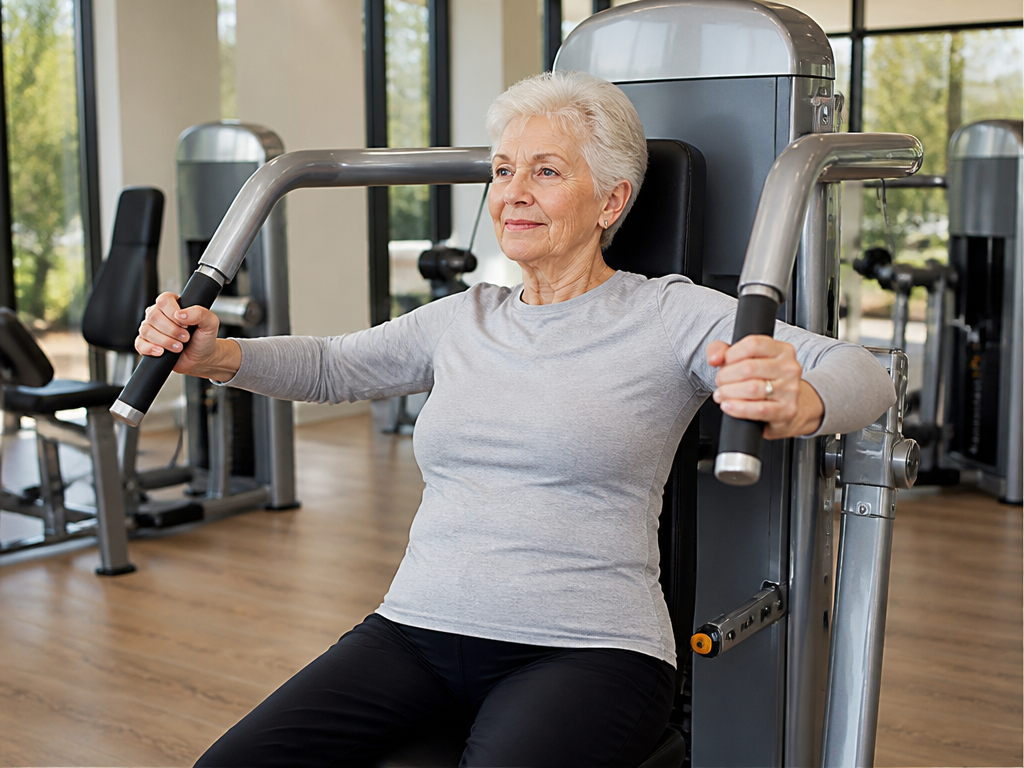
The Alexia Li-Fit series addresses this requirement through a purpose-built selectorized machine platform designed for both the upper and lower body muscle groups most relevant to functional independence in older adults: shoulder press and lat pull, leg press, chest and back, abductor and hip adductor, and limb-specific isolation movements. Each machine in the series provides a resistance range optimized for the senior training population rather than scaled down from commercial fitness configurations.
Accessibility and Entry/Egress Design
Entry and exit from fitness equipment is a primary safety and usability concern for older adults with reduced mobility, balance challenges, or post-surgical restrictions. Senior fitness equipment should feature low step-in heights, stable entry handles, seat positioning that allows safe sitting and standing transitions, and clearance dimensions that accommodate mobility aids where applicable.
Adjustable seat heights, back support positions, and limb support alignment are important for accommodating the range of body dimensions and posture variations common in the senior population. These are not cosmetic accessibility features — they directly determine whether a machine can be used safely and effectively by the target user, and they are the criteria that clinical buyers and facility operators evaluate most carefully when specifying senior fitness equipment.
Ergonomic Design for Arthritic and Post-Surgical Users
A significant proportion of senior fitness equipment users present with arthritis, joint replacement history, or other orthopedic conditions that affect grip strength, joint range of motion, and pain tolerance. Equipment designed for this population should feature padded grip surfaces (reducing pressure on arthritic hand joints), smooth operation through the full range of motion without binding or friction peaks, and joint-friendly movement paths that avoid extreme flexion or extension positions.
Equipment designers and OEM buyers developing senior fitness product lines should work with exercise physiology and physical therapy input to verify that movement path profiles are safe for common senior orthopedic presentations — particularly hip and knee replacement, shoulder pathology, and lumbar spine issues. Equipment that creates pain or discomfort for users with these common conditions is not suitable for the senior channel, regardless of how well it performs for a healthy adult population.
The B2B Commercial Channels: Where Procurement Happens
For fitness equipment brands and distributors entering the senior wellness market, understanding the distinct commercial channels through which equipment is procured is essential for go-to-market strategy. The senior fitness market is not a single channel — it spans several B2B procurement environments with different decision-makers, specifications, and purchasing cycles.
| Channel | Buyer Type | Equipment Specification Driver | Order Pattern | Key Differentiators |
|---|---|---|---|---|
| Commercial gyms (senior-oriented) | Gym operator / procurement manager | Member preferences, ADA compliance | Facility outfitting + replacement cycles | Aesthetics, member appeal, durability |
| Senior living communities | Facilities director / executive director | Accessibility, liability reduction, amenity value | New development + refurbishment | Institutional durability, accessibility design |
| Hospital rehab departments | Physical therapist / department director | Clinical protocols, patient safety | Capital equipment budget cycles (annual) | Calibrated resistance, clinical documentation |
| Physical therapy clinics | Clinic owner / PT practice manager | Patient population, insurance billing | Initial outfitting + expansion | Clinical appropriateness, compact footprint |
| Outpatient sports medicine | Physician / rehab director | Post-surgical protocols, load precision | Selective equipment addition | Precise resistance calibration, brand credibility |
ACSM and Industry Recognition: Senior Fitness as a Top 2026 Trend
The American College of Sports Medicine (ACSM) — the largest and most authoritative professional organization in exercise science — consistently places active aging and senior fitness among its top fitness trends in its annual survey. According to ACSM’s top fitness trends for 2026, programs and exercises beneficial for older adults consistently rank in the top trends, with particularly useful approaches including resistance training to preserve strength, balance and mobility exercises to reduce fall risk, and low-impact cardiovascular activity to support heart health.
The ACSM’s endorsement of senior fitness as a structural trend — not a cyclical one — reflects the professional consensus in exercise science that regular physical activity is the single most evidence-supported intervention for healthy aging. This clinical endorsement creates both a legitimacy framework for senior fitness products and a channel of professional influencers (exercise physiologists, physical therapists, certified personal trainers) who recommend and specify equipment for older adult clients.
For equipment brands entering the senior market, this professional channel — exercise science practitioners who work with aging populations — is an underutilized but highly credible route to market. Practitioners who validate and recommend specific equipment to their clients and to facility operators they advise represent a professional endorsement pathway that consumer marketing cannot replicate.
OEM Implications: Designing and Manufacturing for the Senior Market
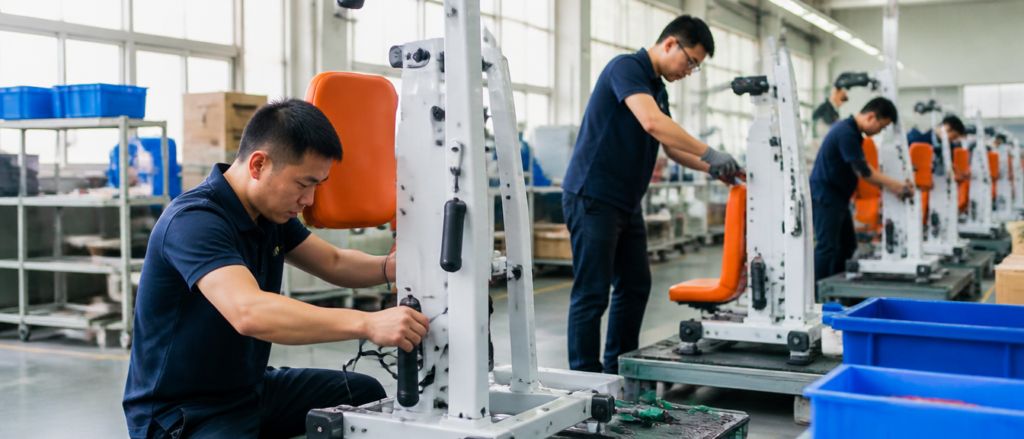
For OEM buyers developing senior fitness product lines, the manufacturing implications are distinct from conventional fitness equipment programs in several important ways. Understanding these differences before approaching a manufacturing partner will improve specification quality and production outcomes.
Precision and Calibration Requirements
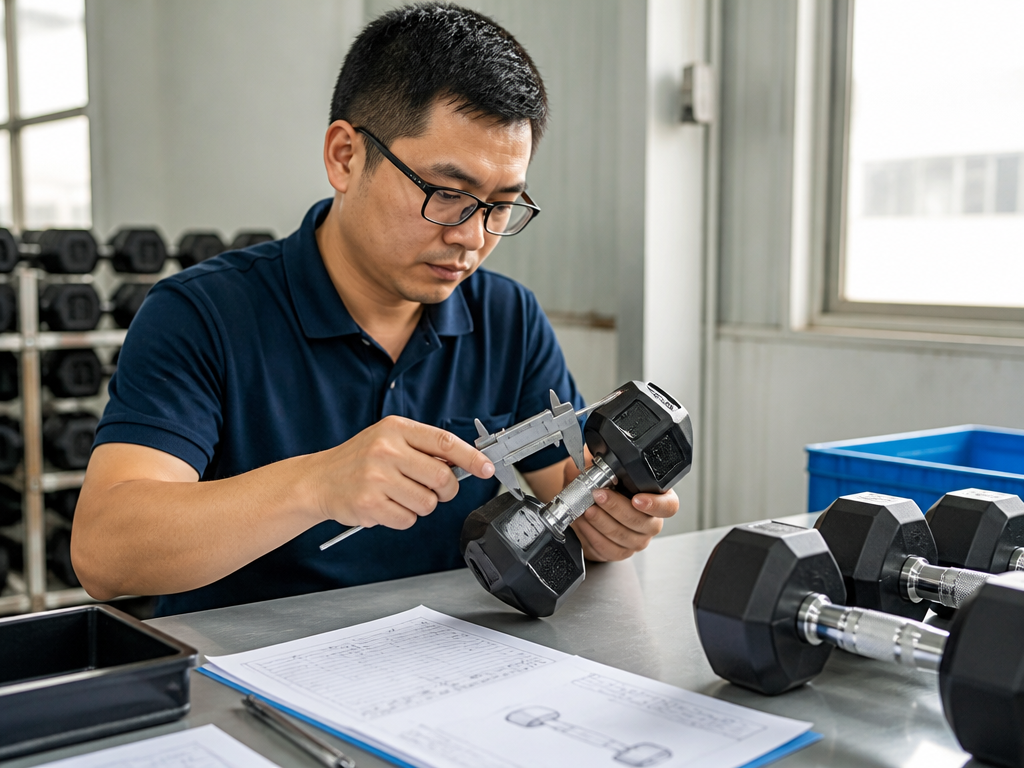
Senior fitness selectorized machines require more precise resistance calibration than conventional commercial machines because the lower absolute loads used in senior training make percentage deviations more clinically significant. A 5 lb deviation on a 200 lb weight stack is 2.5% — within acceptable tolerance for a healthy adult. On a 40 lb weight stack for a senior rehabilitation application, the same 5 lb deviation is 12.5% — clinically significant for a user training at the boundaries of their safe resistance range. Tighter weight stack calibration tolerances (typically ±1–2 lb rather than ±3–5 lb for conventional equipment) should be specified in OEM production agreements for senior fitness machine programs.
Upholstery and Surface Material Selection
Senior fitness equipment experiences different surface wear patterns than conventional equipment. Users with arthritis, reduced grip strength, or skin fragility may exert different friction and pressure patterns on seat and back upholstery. Upholstery materials should be specified for durability under clinical cleaning schedules (hospital-grade disinfectants are routinely used in clinical environments and will degrade inferior materials), antimicrobial treatment, and moisture resistance. For brands entering the clinical channel, confirming upholstery material compliance with clinical cleaning requirements is a specification step that is easily overlooked in standard OEM programs.
Stability and Safety Features
Senior fitness equipment must prioritize stability over compactness in ways that may differ from conventional design priorities. Wider base footprints, integrated stability handles at strategic positions, anti-tip design features, and robust weight stack covers (to prevent finger entrapment for users with reduced hand dexterity) are safety design elements that should be standard in senior fitness OEM specifications. Our fitness equipment applications page details the senior and rehabilitation use contexts that inform our Alexia product specifications.
Regional Market Differences: Where Senior Fitness Investment Is Concentrated
Senior fitness demand is global but unevenly distributed, and understanding regional differences helps brands and distributors allocate market development resources more effectively.
North America: The Most Developed and Institutionalized Market
North America leads the active aging fitness market both in absolute size and institutional development. The Medicare Advantage fitness benefit ecosystem, the SilverSneakers network, and a mature senior living industry that has accepted fitness amenities as a standard offering collectively create the most developed procurement infrastructure for senior fitness equipment anywhere in the world. The US market is further supported by a strong physical therapy industry — more than 200,000 physical therapists practicing in outpatient and institutional settings — that creates consistent clinical equipment procurement demand.
For OEM buyers targeting North American distribution, ADA compliance (Americans with Disabilities Act accessibility standards) is a baseline requirement for any equipment sold into commercial or institutional channels. Confirming ADA-compliant dimensions and features in your OEM specification is a prerequisite for institutional procurement eligibility in this market.
Europe: Healthcare Integration and Preventive Health Policy
European senior fitness markets are driven primarily by public health policy and healthcare system integration rather than the private insurance model that characterizes the North American market. National health services in the UK, Germany, the Netherlands, and the Nordic countries have increasingly incorporated exercise prescription into primary care pathways for older adults — creating institutional demand from general practice networks, community health centers, and specialist geriatric care facilities. Germany and the UK are the two largest European senior fitness equipment markets, with France and the Netherlands growing rapidly.
European institutional buyers place particular emphasis on sustainability and lifecycle documentation in procurement decisions — reflecting public sector procurement policies that are becoming increasingly ESG-integrated. Senior fitness equipment brands entering European institutional channels should be prepared to provide environmental product declarations, material sustainability documentation, and end-of-life recyclability information alongside conventional product specifications.
Asia Pacific: Rapid Infrastructure Build and Demographic Urgency
Japan — with the world’s oldest population by median age — is the most developed Asian senior fitness market and one of the most sophisticated globally for rehabilitation and senior wellness product development. Japanese facility operators and healthcare institutions have decades of experience in senior fitness programming and set high equipment quality, safety, and precision standards for the products they procure.
China, South Korea, and Southeast Asia represent high-growth emerging senior fitness markets where the combination of rapid aging (China’s working-age population peaked in 2015 and is declining), expanding middle-class income, and government health policy investment is creating institutional procurement infrastructure at significant speed. For Taiwan-based OEM manufacturers, proximity and established export relationships with Japan and South Korea provide natural advantages in accessing the most advanced Asian senior fitness markets.
Building a Senior Fitness Product Line: Strategic Considerations
For fitness equipment brands evaluating entry into the senior wellness market, the strategic question is not whether the opportunity is real — the data makes that case conclusively — but how to enter with sufficient product credibility to access institutional channels without the cost structure of a full custom product development program.
The most practical entry strategy for brands with existing OEM manufacturing relationships is to begin with a curated selection of senior-appropriate products from a manufacturer’s existing product range — starting with resistance accessories (soft weights, resistance bands, grip tools) before advancing to selectorized machine programs. This staged approach allows brands to develop channel relationships and build market understanding before committing to the capital-intensive tooling investment of a proprietary selectorized machine program.
For brands with sufficient volume commitments to develop a proprietary senior fitness line through an ODM partnership, the investment in purpose-built product design — with clinical advisory input, accessibility design expertise, and clinical channel feedback incorporated from the outset — produces products that institutional buyers recognize as genuinely appropriate rather than conventionally adapted. This differentiation is increasingly important as more brands enter the senior fitness equipment category with marginally adapted conventional products. Our OEM/ODM services support both approaches — off-the-shelf program adaptation and full proprietary product development — for brands at different stages of the senior market entry journey.
Positioning and Branding Considerations for the Senior Fitness Market
Brands entering the senior fitness equipment market face a nuanced positioning challenge: the target institutional buyers (facility operators, procurement managers, clinicians) are different from the end users (older adults), and the product positioning that appeals to one audience may not resonate with the other.
Institutional buyers respond to clinical credibility, accessibility documentation, institutional durability specifications, and liability risk management language. They are making procurement decisions under regulatory and liability frameworks and need product documentation that supports those decisions. Marketing materials that emphasize clinical appropriateness, safety standards compliance, and institutional warranty terms address their primary decision criteria.
End users — the older adults who will actually use the equipment — respond to messaging around capability, independence, and vitality. They resist equipment that emphasizes limitation, fragility, or decline. Product design and brand communication for this audience should emphasize what the equipment enables (functional strength, active living, independence) rather than what it accommodates (limited mobility, reduced strength, health conditions). The most successful senior fitness brands navigate this dual-audience positioning with distinct communication layers — institutional specification sheets alongside consumer-facing capability messaging — rather than attempting a single message that serves both.
Frequently Asked Questions
What is the current size of the active aging fitness market?
The active aging fitness market reached USD 14.3 billion in 2024 and is projected to grow to USD 28.1 billion by 2033 at a CAGR of 7.8% — outpacing the broader fitness equipment market growth rate of approximately 5.3%. North America dominates the market, accounting for a substantial share driven by Medicare integration, the Baby Boomer demographic wave, and a mature senior living facility sector.
Why are adults 65+ visiting gyms more frequently than other age groups?
Several factors converge: Baby Boomers who maintained active fitness habits throughout adulthood are continuing these habits in older age; Medicare Advantage and supplemental insurance programs like SilverSneakers are subsidizing gym access for over 18 million eligible seniors; and growing clinical evidence connecting regular exercise to healthy aging outcomes is motivating health-conscious older adults to maintain or begin fitness programs. Time availability and disposable income among retirees also support higher visit frequency than among working-age adults.
What types of equipment are most in demand for senior fitness facilities?
Low-impact selectorized resistance machines (with accessible entry/egress, low weight stack increments, and smooth resistance profiles) are the primary equipment type for senior fitness facilities. Balance and stability training equipment, low-impact cardio equipment (recumbent bikes, ellipticals, Nu-Step-style cross-trainers), resistance accessories (soft weights, resistance bands, grip tools), and functional movement equipment (straps, stability surfaces) complete the typical senior facility mix. Equipment designed with accessible geometry, supportive handles, and clinical-grade durability specifications is preferred over conventional commercial equipment in clinical channels.
How is the senior fitness equipment market different from conventional fitness equipment from an OEM perspective?
Senior fitness equipment OEM programs require tighter resistance calibration tolerances, upholstery materials rated for clinical cleaning schedules, accessibility design features (low step-in heights, stability handles, adjustable positioning), and safety features (anti-tip bases, weight stack guards) that differ from conventional fitness equipment specifications. Quality certifications relevant to clinical environments and documentation supporting institutional procurement requirements also need to be incorporated into OEM program planning.
Which distribution channels should fitness equipment brands prioritize when entering the senior market?
Senior living communities (independent living, assisted living, CCRCs) represent the largest single institutional channel, with new development and refurbishment procurement cycles creating sustained demand. Hospital rehabilitation departments and outpatient physical therapy clinics are the highest-specification clinical channels. Senior-oriented commercial gym operators (facilities with dedicated senior programs or SilverSneakers affiliations) represent a volume channel accessible through conventional gym equipment distribution. Institutional healthcare distributors with established relationships in the senior living and clinical rehabilitation sectors are the most effective channel partners for brands without existing healthcare distribution infrastructure.
Conclusion
Die senior fitness market growth story is compelling precisely because it combines demographic certainty with behavioral shift and institutional investment in ways that produce sustained, structural demand rather than cyclical opportunity. The 14.3 billion-dollar active aging fitness market growing at 7.8% CAGR is not being driven by a fitness trend that will peak and decline — it is being driven by the progressive aging of the largest generation in US history and the healthcare system’s recognition that fitness investment in this population reduces costs and improves outcomes at scale.
For fitness equipment brands and distributors willing to invest in the product specifications, channel relationships, and clinical credibility that this market requires, the senior wellness opportunity is one of the most structurally sound growth strategies available in the fitness industry. If you are building or expanding a senior fitness product program, connect with our team to explore OEM manufacturing options across our Alexia senior wellness equipment line.