How E-Commerce changing Fitness Equipment Design? Fitness equipment has always been heavy, bulky, and expensive to ship. For most of the industry’s history, that physical reality constrained distribution to retail stores and commercial gym supply channels — the only viable pathways for moving large, dense iron and steel products to end users efficiently. E-commerce has fundamentally disrupted this constraint. The global e-commerce fitness equipment market reached USD 15 billion in 2025, growing at a CAGR of 12% — far outpacing the broader fitness equipment market’s 5–7% growth trajectory. Brands that have adapted their product design, packaging, and OEM sourcing strategy for the e-commerce reality are capturing this growth; brands that are still designing for retail and commercial distribution are ceding share to more agile competitors.
The implications of e-commerce’s rise in the fitness equipment category run deeper than channel strategy. They reshape product design priorities — compactness, flat-pack assembly, residential aesthetics — in ways that require changes to OEM briefs, tooling investments, and quality standards. They redefine packaging requirements from pallet-optimized commercial freight cartons to individual parcel-survivable retail boxes with consumer brand presentation standards. And they create new competitive dynamics where product listing photography, customer reviews, and fulfillment speed matter as much as product quality in determining purchase outcomes. This article examines each of these dimensions and their implications for fitness equipment brands navigating the e-commerce transition.
The Scale of the E-Commerce Shift in Fitness Equipment
The e-commerce transition in fitness equipment is not a minor channel experiment — it represents a structural redistribution of where purchasing decisions are made and where products travel to reach consumers. According to Archive Market Research, the global e-commerce fitness products market is valued at USD 15 billion in 2025 and projected to grow at 12% CAGR through 2033 — more than double the growth rate of the overall fitness equipment market.
Within this e-commerce market, strength training equipment — dumbbells, barbells, kettlebells, weight plates, resistance bands, and compact racks — represents approximately 30% of unit volume, with over 120 million units sold annually through online channels. The combination of product familiarity (consumers understand what a dumbbell is and need no in-store demonstration), clear specifications (weight is a quantifiable attribute that translates well to online product listings), and relatively manageable parcel dimensions for most free weights makes the strength accessories category one of the most e-commerce-native product types in the fitness equipment market.
The pandemic accelerated a shift that was already underway. Online fitness equipment sales surged dramatically during 2020–2021, and while the post-reopening period saw some normalization, the structural shift in consumer purchasing behavior — using e-commerce as the default discovery and purchase channel for home fitness products — has proven permanent. Today’s consumers are savvy researchers and quality-conscious, demanding deeper product detail including origin, material lists, packaging, care instructions, 3D views, and testimonial videos. This consumer expectation profile shapes the entire product listing strategy for fitness equipment brands operating in e-commerce channels.
How E-Commerce Changes Product Design Priorities
The shift from retail and commercial distribution to e-commerce distribution has created a set of product design priorities that did not exist — or existed in much weaker form — when fitness equipment was designed primarily for retail floor display and commercial gym deployment. These new priorities require deliberate OEM specification adjustments and sometimes fundamental product architecture changes.
Compactness and Space Efficiency
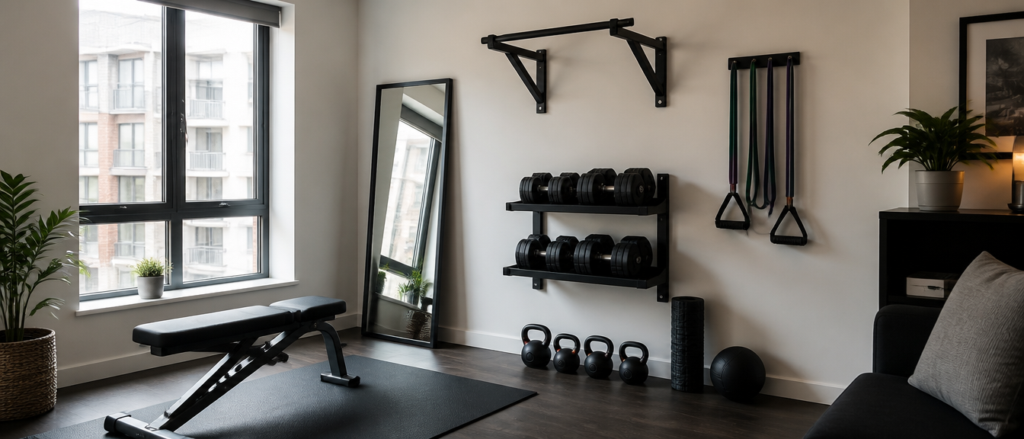
The home gym buyer purchasing online is almost universally more space-constrained than a commercial gym operator. Urban apartments, suburban spare rooms, and garage conversions impose dimensional limits that commercial gym floor plans do not. This space constraint translates directly into a product design premium for compact form factors, foldable configurations, and adjustable range-extending designs that allow one product to replace several fixed-weight alternatives.
Adjustable dumbbell systems — where a single set of handles accommodates a range of weight increments through a selector mechanism — represent the e-commerce-era redesign of the traditional fixed-weight dumbbell set. They address the space efficiency imperative directly: a 5–52.5 lb (or 2.5–25 kg) adjustable set occupies the floor space of a single pair of dumbbells while replacing 15 individual pairs. The premium price point that adjustable dumbbell systems command reflects both the manufacturing complexity and the genuine consumer value they deliver in space-constrained home gym contexts.
For OEM buyers developing or expanding e-commerce-focused product lines, space efficiency is an explicit design brief criterion — not an afterthought. This means reviewing the assembled and stored dimensions of every product in the context of realistic residential deployment, not just warehouse or commercial gym deployment. A rack that stores flat against a wall when not in use, a bench with a zero-gap storage profile, a dumbbell set that fits on a 16-inch depth shelf — these dimensional constraints should be part of the OEM specification from the earliest design stage.
Residential Aesthetics
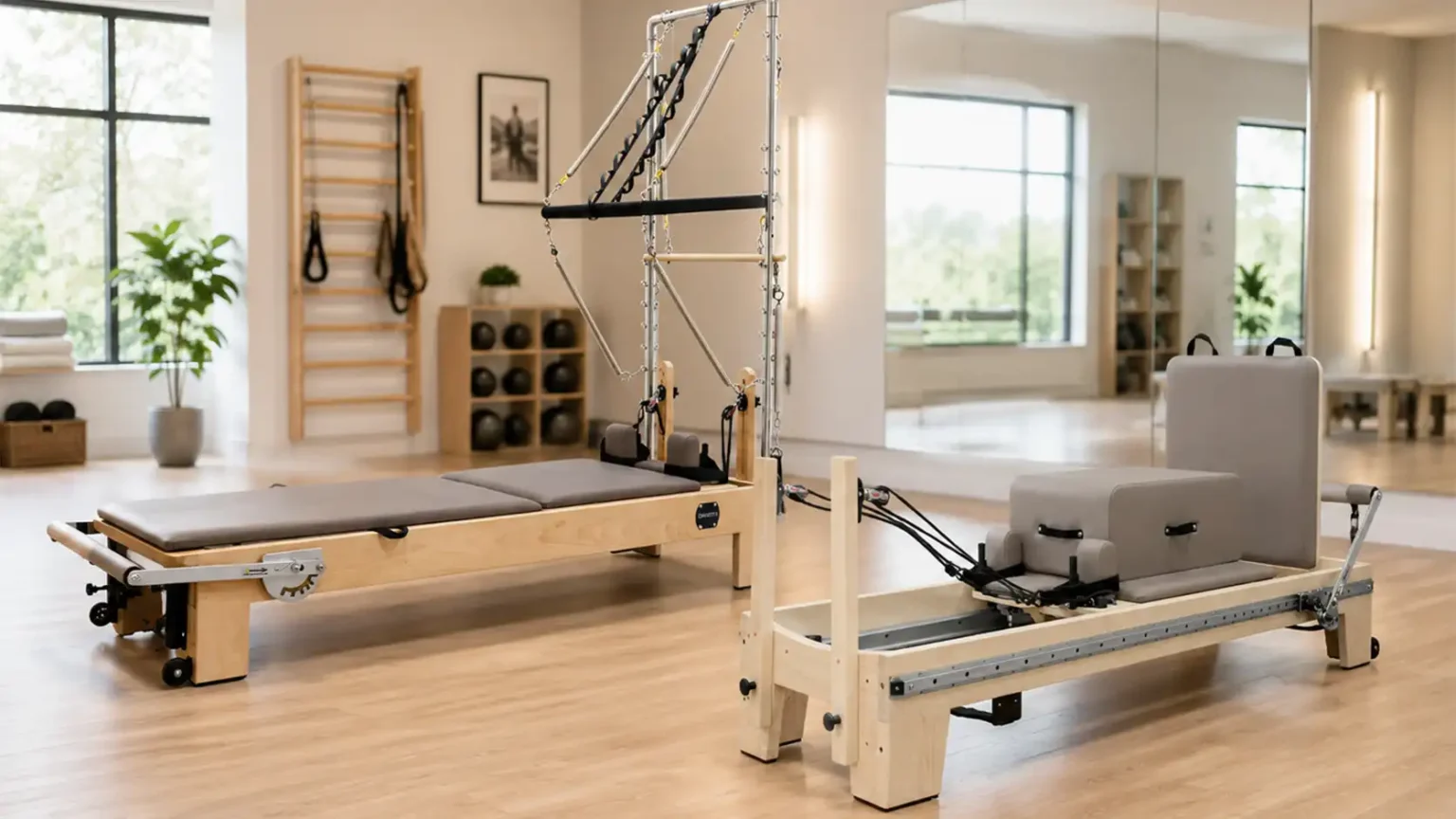
Commercial gym equipment is designed to convey industrial strength and institutional durability. Home gym equipment — particularly for the premium e-commerce consumer — increasingly needs to convey those same performance attributes while also fitting visually into a residential interior design vocabulary. The matte black powder-coated rack that looks perfect in a commercial gym may look aggressive and out-of-place in a home studio alongside a Peloton and a yoga mat area.
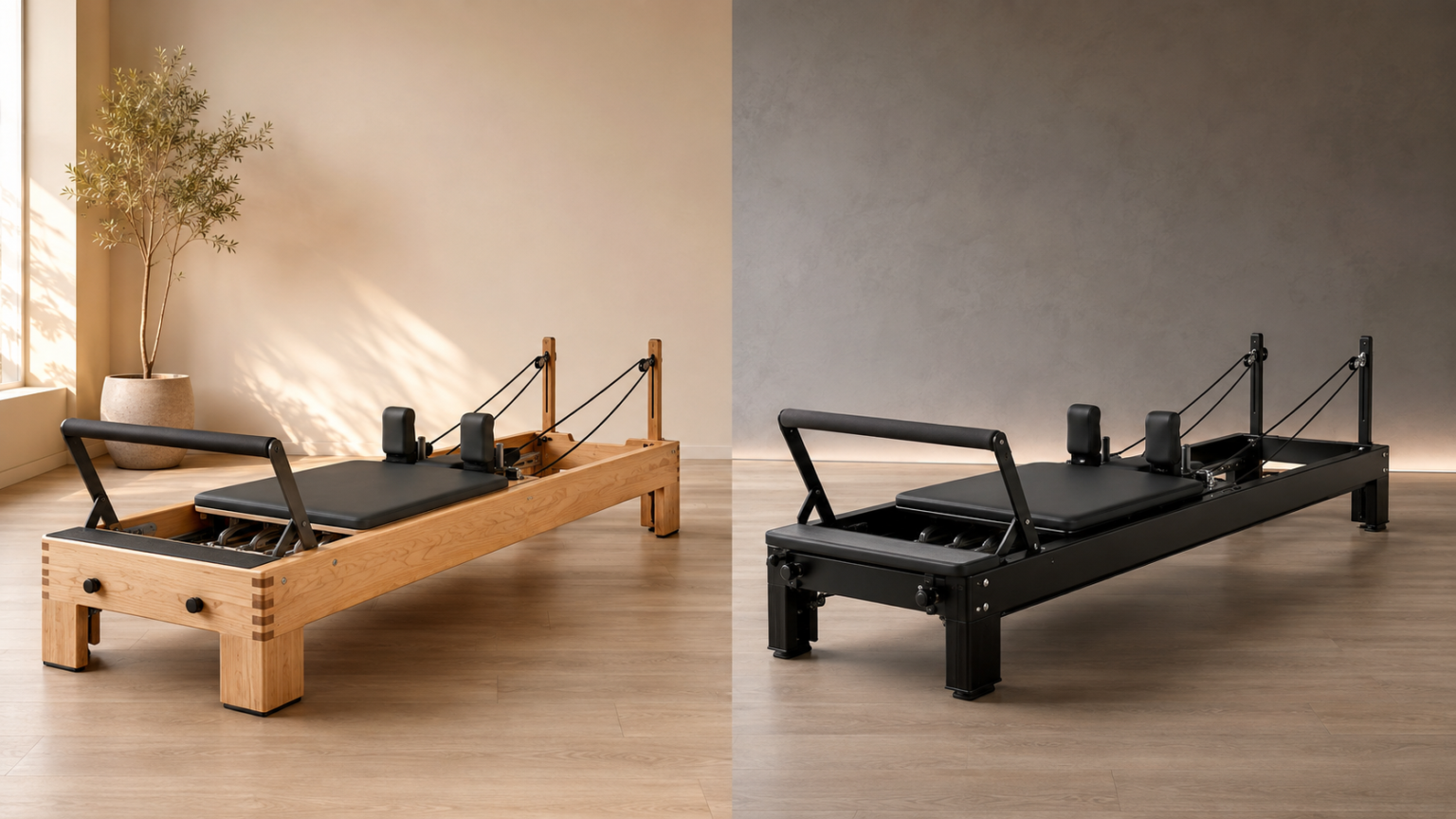
Residential aesthetic design priorities include: softer color palette options beyond standard commercial black and grey; natural material accents (wood footrests, leather-wrapped handles, bamboo storage components); cleaner visual lines with less aggressive angular styling; and surface treatments that age gracefully in residential environments rather than the institutional high-wear profiles of commercial equipment. These aesthetic criteria translate into OEM color and surface treatment specifications that differ from commercial product briefs — different powder coat options, wood component sourcing and finishing, and chrome versus matte metallic detail choices.
Self-Assembly Optimization
Commercial gym equipment is typically assembled by professional installation teams with tool kits and technical documentation. E-commerce fitness equipment is assembled by consumers — often without specialized tools, in awkward residential spaces, and without prior experience with the specific product. Poor self-assembly experience is a leading driver of negative reviews and returns for fitness equipment sold through online channels. A product that requires 3 hours and 12 steps to assemble is a product that generates one-star reviews regardless of its structural quality.
Self-assembly optimization in OEM product design means: minimizing the number of components and fasteners; using visual assembly diagrams rather than text-only instructions; designing joint configurations that are intuitive to align correctly; providing the required tools in the package; and testing the assembly process with non-expert users before approving production. Assembly quality is a product quality dimension for e-commerce brands — it should receive the same specification attention as structural load capacity and surface finish.
E-Commerce Packaging: The Complete Redesign Imperative
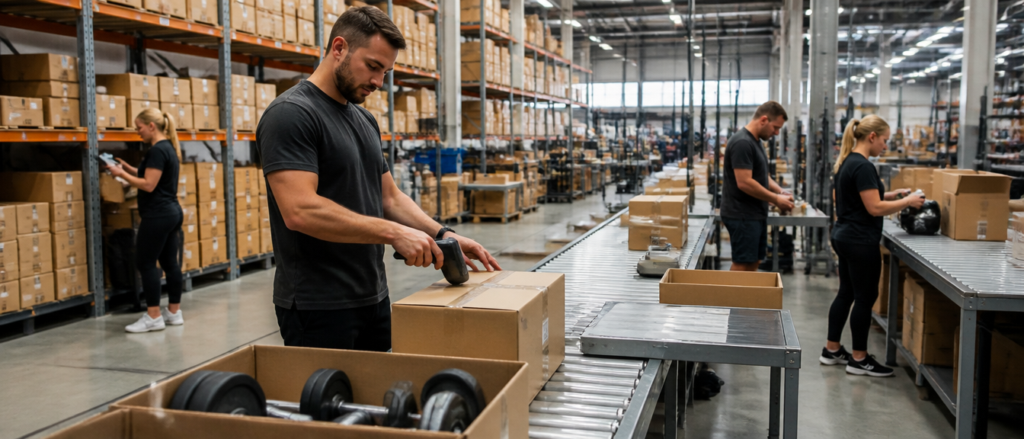
Packaging for e-commerce fitness equipment is not commercial packaging with different labels. It is a fundamentally different engineering challenge — one that most brands underestimate until their first wave of transit damage complaints, negative reviews, and return processing costs arrives.
Parcel vs. Pallet: Entirely Different Mechanical Environments
Commercial gym equipment packaging is designed for pallet-based LTL freight: the primary stresses are vertical compression from stacking loads, forklift handling that maintains carton orientation, and pallet-to-pallet movement without conveyor contact. E-commerce parcel shipping imposes a completely different set of mechanical stresses: drops from conveyor belt heights (typically 18–36 inches at sorting facility transitions), conveyor belt vibration and belt-to-belt transfers, stack compression in delivery vehicle loads, and the notorious “door drop” — the last-mile delivery person dropping a 40 lb box onto a concrete doorstep.
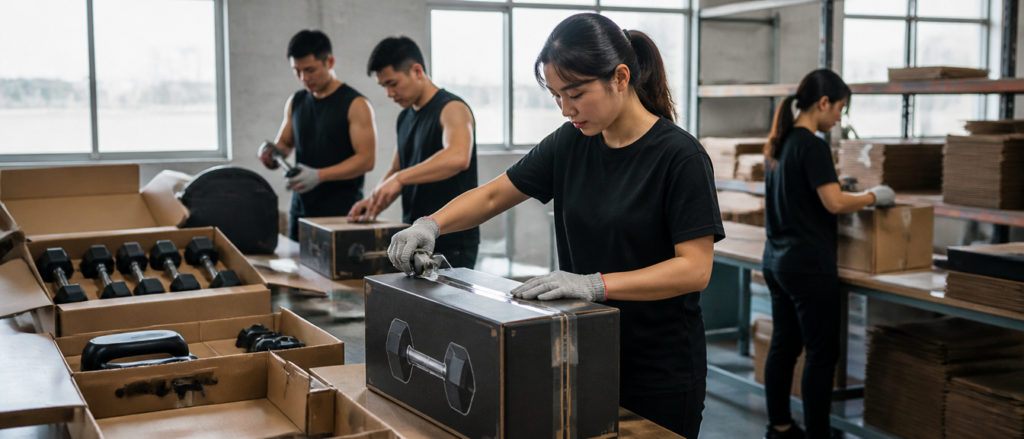
Packaging that has never been tested for these e-commerce parcel stresses will fail — not occasionally but consistently. The ASTM D4169 standard for shipping container and systems testing includes the performance sequences most relevant to e-commerce parcel environments: drop, vibration, compression, and incline impact. Requiring your OEM manufacturer to test packaged product samples against ASTM D4169 Level II sequences before packaging approval is the engineering standard for any brand seriously pursuing e-commerce distribution. For heavy or bulky fitness gear, double-walled boxes or crates are essential, packed to minimize empty space. For long items like foam rollers, snug packaging reduces dimensional weight.
Dimensional Weight Optimization
In e-commerce parcel shipping, the freight charge is calculated using the greater of actual weight and dimensional weight (a formula that charges for the volume of the package). For dense fitness equipment — where actual weight dominates dimensional weight for most products — dimensional weight is typically not the primary cost driver. However, for compact accessories (resistance bands, grip tools, soft weights, sport accessories), overly large cartons generate excess dimensional weight charges that erode margin on already thin-priced items.
Packaging should be designed to the minimum dimensions that provide adequate product protection — a principle that requires active engineering rather than defaulting to the nearest standard carton size. For brands managing dozens of fitness accessory SKUs across e-commerce channels, the cumulative margin impact of dimensional weight optimization across the full catalog is meaningful. Review packaging dimensions against actual product dimensions for every SKU in the line, and specify minimum acceptable interior dimensions in your OEM packaging brief rather than leaving carton selection to the manufacturer’s default.
Retail Presentation and Unboxing Experience
E-commerce purchase decisions are made based on product listing photography and reviews — but the consumer’s physical experience of the product begins with the unboxing. For premium fitness equipment brands selling at elevated price points through DTC websites, unboxing experience is a brand touchpoint that generates social sharing, influences first impressions, and affects return rates. A product that arrives in a visually appealing, well-organized package with clear brand presentation signals quality before the consumer has even touched the product.
Unboxing experience design for e-commerce fitness equipment includes: branded exterior carton with clean, high-quality print artwork; structured internal organization (each component in a defined position, not loose in packing material); branded tissue or wrap for premium accessories; clear and attractive instruction booklet or digital QR-code link to assembly video; and a personal note or thank-you card for DTC shipments. These elements have per-unit costs in the range of $0.50–$3.00 additional packaging investment — trivial relative to their impact on consumer perception and review likelihood for premium products.
Amazon FBA Compliance
For brands selling through Amazon’s FBA (Fulfilled by Amazon) program, packaging must comply with Amazon’s specific preparation and labeling requirements. Non-compliant packaging generates FBA receiving rejections, repackaging fees charged by Amazon, and delays in product availability — all of which erode the unit economics of FBA distribution. Key FBA packaging requirements for fitness equipment include: barcode placement on an accessible, flat surface; maximum package dimensions and weight limits per category; specific polybag requirements for certain product types; and suffocation warning labels for plastic bags used in packaging.
Amazon’s FBA requirements evolve regularly, and should be verified with Amazon’s current seller central documentation before each production run. Including a current FBA compliance review as a packaging approval checkpoint in your OEM production process — verifying against current Amazon requirements rather than requirements from the last production cycle — prevents costly intake rejections at the FBA warehouse.
Product Photography and Listing Optimization as OEM Considerations
E-commerce product listings compete for purchase decisions in a visual environment where photography quality and listing comprehensiveness directly affect conversion rates. For fitness equipment brands sourcing through OEM manufacturing, the connection between OEM production and e-commerce listing performance runs through the physical product attributes that photography must communicate effectively.
What Makes Fitness Equipment Photograph Well
Surface finish consistency is the single most impactful product attribute for e-commerce photography quality. A rubber-coated dumbbell with uniform surface texture, consistent color across all denominations in the set, and clean knurl definition on the handle photographs beautifully on white backgrounds and in lifestyle settings — producing the product images that convert browsers to buyers. The same product with coating voids, color variation between weight denominations, or mold parting lines on the surface will generate customer complaints about product appearance even if the structural quality is perfect.
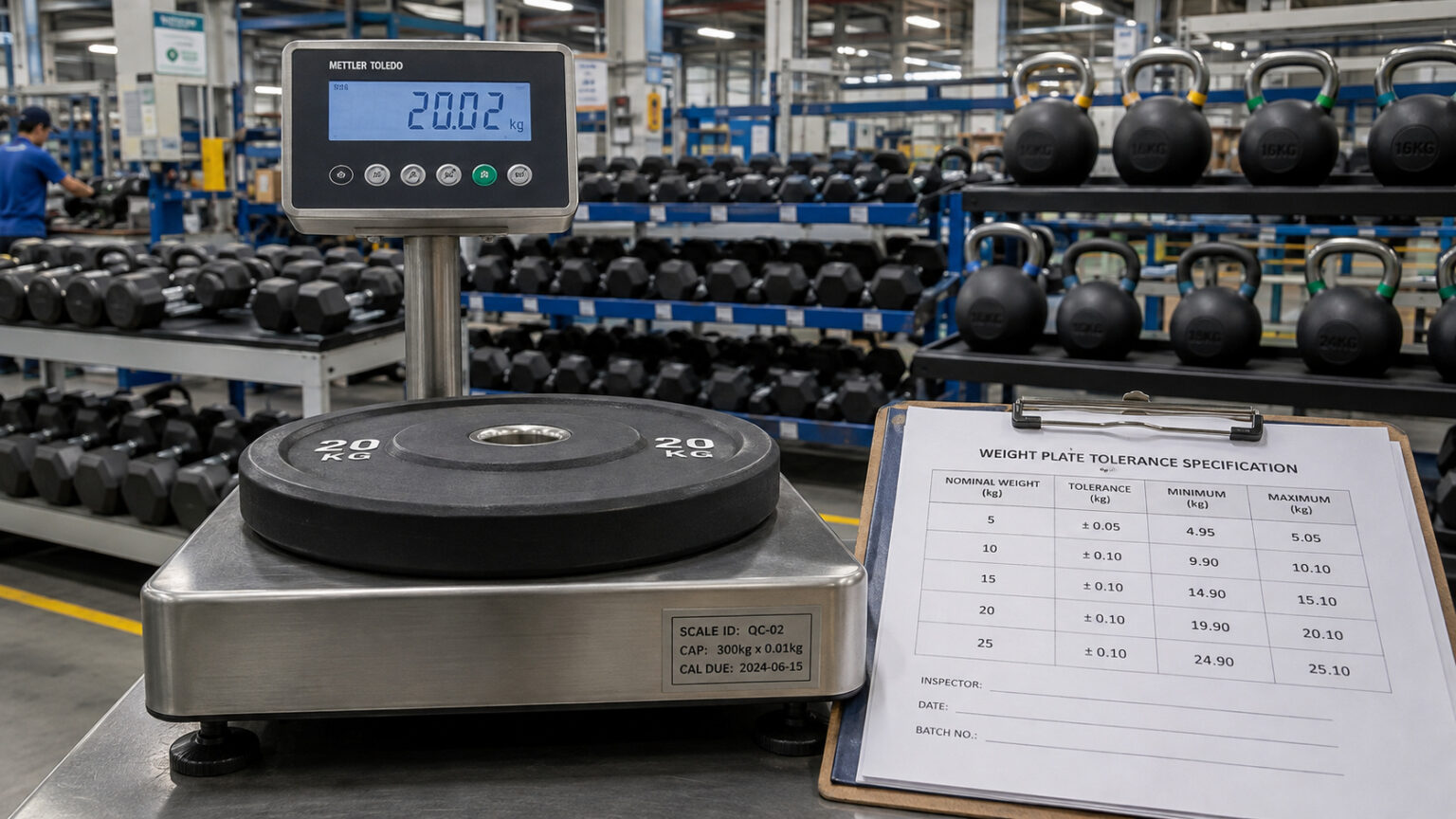
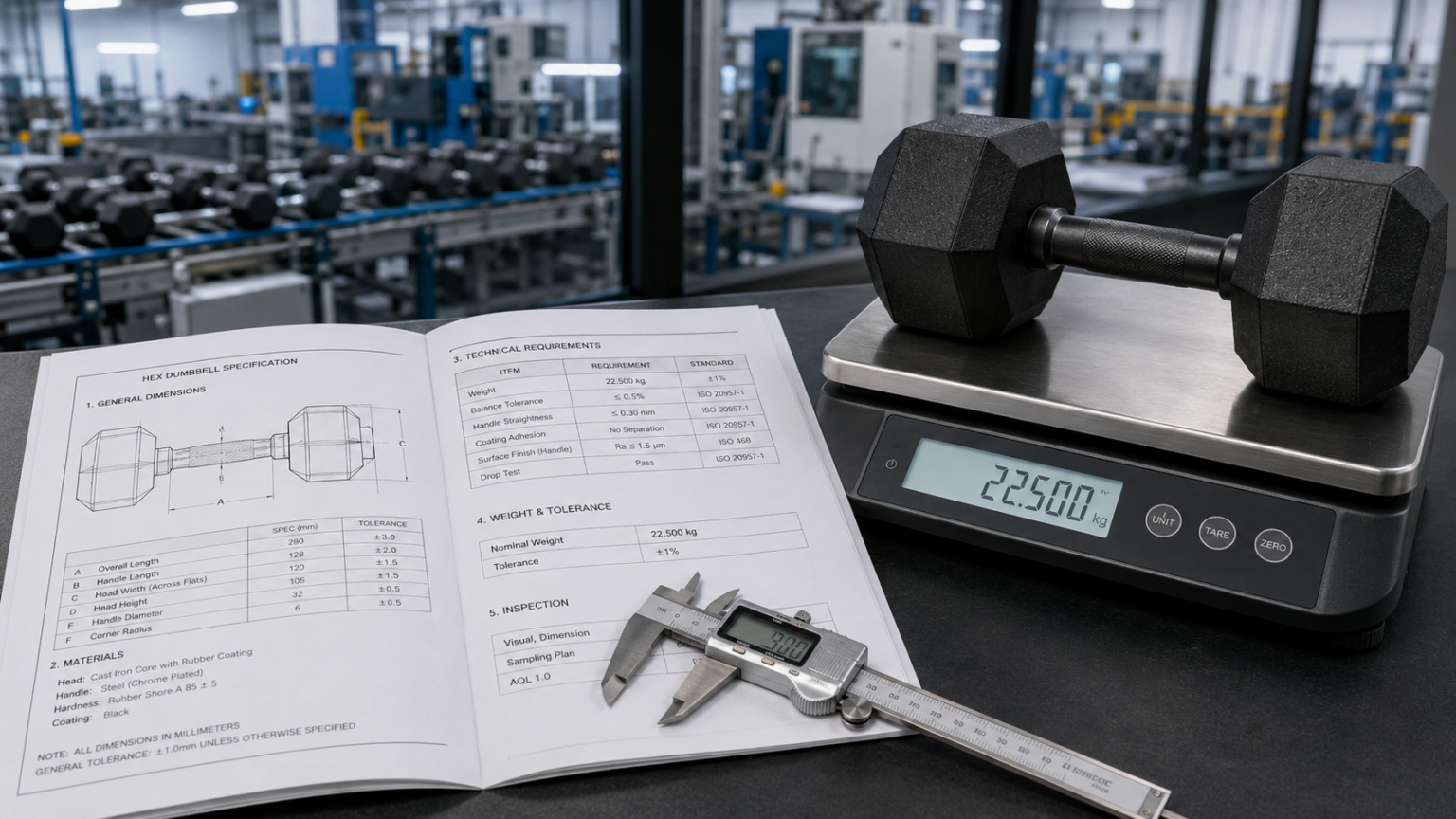
This means that for e-commerce-focused OEM programs, surface finish consistency across a production run is not just a quality requirement — it is a commercial requirement. Including surface consistency standards in your pre-shipment inspection checklist (verified through visual inspection of a random sample from across the production run, not just the first units produced) ensures that the product arriving in a consumer’s home matches the listing photography that motivated the purchase.
360° and Video Content Requirements
Today’s consumers demand deeper product detail including 3D views and testimonial videos — a requirement that creates content production implications connected to the physical product. Three-dimensional product viewers and 360° photography require a physical sample with flawless surface quality that can be rotated and photographed from every angle, including from below and from the inside of adjustable mechanisms. Video content requirements — assembly videos, comparison videos, in-use lifestyle content — require product samples that match consumer expectations for finish quality and assembly ease.
Planning for e-commerce content production as part of the OEM sampling process — not as an afterthought after production — ensures that the samples produced for content creation match the products consumers receive. Many brands make the mistake of producing premium-quality photography samples and then approving production to a slightly lower standard; the disconnect between listing photography and received product is a leading driver of negative reviews.
How E-Commerce Is Changing the OEM Sourcing Relationship
The e-commerce channel’s requirements create new dimensions in the OEM manufacturing relationship that brands should address explicitly rather than assuming will be managed informally.
Smaller Order Quantities and Faster Replenishment
E-commerce inventory management operates differently from retail restocking cycles. DTC brands and marketplace sellers use demand-driven replenishment models that may require smaller, more frequent production runs rather than the large seasonal orders typical of retail channel sourcing. A manufacturer accustomed to two or three large container orders per year from a client may find it operationally challenging to accommodate six or eight smaller replenishment runs with shorter lead times. Discussing replenishment model expectations with your OEM manufacturing partner before establishing a new e-commerce product program — and confirming that their production scheduling can accommodate your anticipated ordering pattern — prevents conflicts that arise when reality diverges from assumed delivery expectations.
Returns Management and Product Quality
E-commerce return rates for fitness equipment are typically higher than commercial channel return rates, because consumer purchase decisions are made without in-person product examination and because return friction is lower in e-commerce (free returns are expected by many online buyers). Returns that are triggered by product quality issues — visible surface defects, assembly difficulties, packaging damage — are both controllable and preventable through OEM specification and inspection discipline. Returns triggered by consumer preference changes or sizing issues are less controllable but can be minimized through accurate listing content that sets correct expectations.
For OEM buyers managing e-commerce-focused product lines, incorporating return rate tracking into your quality performance review of the manufacturing relationship is important. If specific product batches correlate with elevated return rates, the production variables that account for that correlation — coating batch, assembly difficulty, packaging change — should be traceable through production records. Our OEM/ODM services include production traceability documentation that supports exactly this kind of quality correlation analysis.
Private Label and Brand Customization for E-Commerce
E-commerce channel competition is intense, and brand distinctiveness — through proprietary colorways, exclusive packaging designs, and custom branding elements — creates visual differentiation in a marketplace where product listings compete directly alongside each other. Private label OEM programs for e-commerce channels should therefore plan for a higher level of visual customization than commercial channel programs typically require: brand-specific color matching, embossed or etched logo applications rather than stickers, and packaging artwork that communicates brand positioning distinctively against generic competitors listing at similar price points.
According to Shopify’s sporting goods industry trends report, brands poised to win in the current e-commerce environment are those that sell experiences alongside their equipment — building community and delivering personalized interactions that generic marketplace sellers cannot replicate. For fitness equipment brands, the private label OEM program that supports this experience-selling strategy requires packaging and product customization that makes the brand visible and distinct in every consumer touchpoint, from the product listing photograph to the unboxing experience to the assembled product in use.
Social Commerce and Influencer Channels: The New E-Commerce Discovery Layer
Beyond traditional marketplace and DTC website channels, social commerce — the direct integration of product purchasing into social media platforms — is becoming a meaningful sales channel for fitness equipment brands that have built engaged followings on Instagram, TikTok, and YouTube. According to Shopify’s sporting goods trends analysis, 81% of consumers attended in-person fitness experiences in the past year, and the community relationships built in those environments extend online, creating social commerce pathways where fitness influencers and community leaders become effective sales channels for brands their audiences trust.
What Social Commerce Requires From OEM Programs
Social commerce-driven fitness equipment sales have specific product and fulfillment characteristics that OEM programs should anticipate. Influencer-driven purchase events — where a fitness content creator’s recommendation generates a sudden concentrated demand spike — require either available inventory or a supply chain capable of rapid replenishment. Brands that can fulfill social commerce demand peaks without stockouts build the creator relationships that generate repeated recommendation cycles; brands that stock out frustrate both creators and their audiences.
Products designed for social commerce success also have specific visual characteristics: they need to look distinctive and aspirational in the vertical video format that TikTok and Instagram Reels use for product demonstrations, which means surface treatments and form factors that read well in motion and under variable lighting conditions. The matte rubber hex dumbbell that photographs cleanly on a white product photography background may look flat in a creator’s gym filming setup; the same product in a distinctive colorway or with a striking textured finish becomes a visual element that creates recall and desire in a scrolling social media environment.
Limited Drops and Creator Collaboration
Some of the most effective social commerce fitness equipment launches have used limited-production drop mechanics — where a finite quantity of a distinctive colorway or co-branded product is made available for a defined period, creating urgency and exclusivity that drives immediate purchase conversion. Executing limited drops requires OEM manufacturing flexibility: small production runs (200–500 units), fast turnaround, and packaging customization for the specific drop branding. These requirements are accessible in established OEM partnerships where the manufacturer knows the brand’s products well and can accommodate insert production runs without disrupting the core production schedule.
According to eFulfillment Service’s 2025 fitness product fulfillment guide, the fitness equipment brands seeing the strongest e-commerce growth are those combining product quality with authentic community engagement — a combination that social commerce channels amplify when the product delivers on the visual and quality expectations set by creator content.
The DTC Strategy Equation: What E-Commerce Brands Need From OEM Partners
Fitness equipment brands operating DTC e-commerce models have a distinct set of requirements from their OEM manufacturing partners that commercial channel brands do not share — and that established manufacturers serving primarily commercial gym channels may not be fully equipped to address without deliberate adaptation.
| E-Commerce OEM Requirement | Why It Matters | How to Verify Manufacturer Capability |
|---|---|---|
| Retail-ready packaging design capability | Unboxing experience and brand presentation affect reviews and returns | Request examples of e-commerce packaging they have produced for other DTC brands |
| Smaller MOQ flexibility | Demand-driven replenishment requires smaller, more frequent runs | Confirm minimum order requirements by SKU for repeat production runs |
| Drop test packaging compliance | Parcel shipping environment differs fundamentally from LTL freight | Request ASTM D4169 drop test results for packaged product samples |
| Surface finish consistency across run | Photography and consumer unboxing require uniform appearance | Include surface consistency in pre-shipment inspection checklist; verify with random sample from full run |
| Private label customization depth | E-commerce brand differentiation requires visual distinctiveness | Review customization options (colors, surface treatments, logo methods) and associated lead time/cost |
| Amazon FBA-compliant labeling | Non-compliant packaging generates costly FBA rejections | Confirm factory’s familiarity with current FBA preparation requirements by product category |
Frequently Asked Questions
How large is the e-commerce fitness equipment market in 2025?
The global e-commerce fitness products market is valued at approximately USD 15 billion in 2025, growing at a CAGR of 12% through 2033 — significantly outpacing the overall fitness equipment market’s 5–7% growth rate. Strength training equipment (dumbbells, kettlebells, weight plates, resistance accessories) represents approximately 30% of unit volume, with over 120 million units sold annually through online channels.
What packaging tests should e-commerce fitness equipment pass before production approval?
Packaged product samples should be tested against ASTM D4169 Level II performance sequences, which cover the primary e-commerce parcel shipping stresses: vertical drop from conveyor heights (18–36 inches), vibration exposure, compression from stack loading, and incline impact. Additionally, verify compliance with Amazon FBA preparation requirements if the product will be sold through FBA, as non-compliant packaging generates receiving rejections and repackaging fees.
How does e-commerce change dumbbell design compared to commercial gym specifications?
E-commerce-focused dumbbell design prioritizes: compact storage dimensions (low-profile rack configurations, wall-mount compatibility); adjustable range-extending mechanisms that reduce total floor space required; residential aesthetic options (color options beyond commercial black and grey, cleaner visual lines); self-assembly optimization where applicable; and surface finish consistency that photographs uniformly across denominations. Commercial gym specifications prioritize maximum load capacity, institutional durability, and low maintenance over these residential and photographic priorities.
What OEM minimum order quantities are realistic for e-commerce replenishment programs?
Minimum order quantities for e-commerce replenishment vary by product category and manufacturer. For standard rubber-coated dumbbells or kettlebells in an established OEM relationship, many manufacturers will accept replenishment orders as low as 200–500 units per denomination, though 500–1,000 units per run is more typical for favorable pricing. For products requiring dedicated production line setup (adjustable mechanisms, specialized coatings), MOQs tend to be higher. Discuss replenishment model requirements with your manufacturer during the program setup phase, not after the first season of e-commerce sales.
How does product photography quality connect to OEM production specifications?
Surface finish consistency is the primary connection: uniform coating texture, consistent color across denominations, and clean logo execution directly determine the quality achievable in product photography and in consumer unboxing experience. Including surface finish consistency standards in your pre-shipment inspection protocol — verified through random sampling across the full production run — ensures that the product arriving with consumers matches the listing photography that drove the purchase. Disconnect between listing photography and delivered product quality is a leading driver of negative reviews and returns for fitness equipment brands.
Conclusion
The rise of e-commerce fitness equipment is not simply a channel shift — it is a design, packaging, and OEM sourcing transformation that demands active adaptation from brands that want to capture the 12% annual growth trajectory of online fitness equipment sales. The brands that are winning in this environment are those that have internalized e-commerce requirements into every layer of their product program: compact residential design specs, parcel-survivable packaging engineering, surface finish standards for photography quality, and OEM manufacturing relationships capable of supporting the smaller, more frequent replenishment cycles that e-commerce demand patterns require.
If you are developing or expanding a fitness equipment product line for e-commerce distribution — DTC, Amazon, or omnichannel — our team is available to discuss OEM program design that addresses the specific product and packaging requirements of the online channel, from compact design specifications to retail-ready packaging production across our full range of strength, Pilates, and senior wellness equipment.