Why Kettlebell Sourcing Rewards Specification
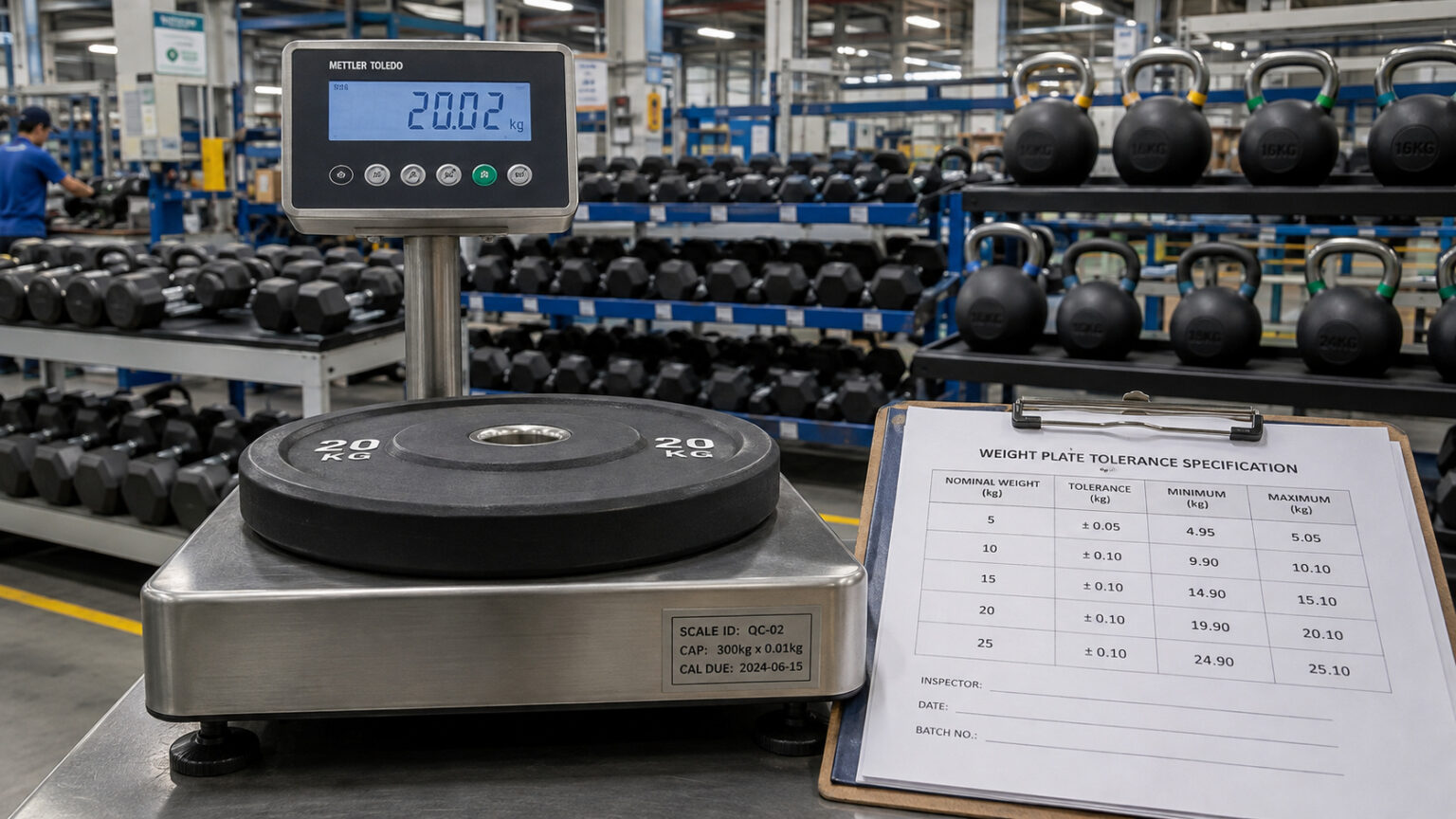
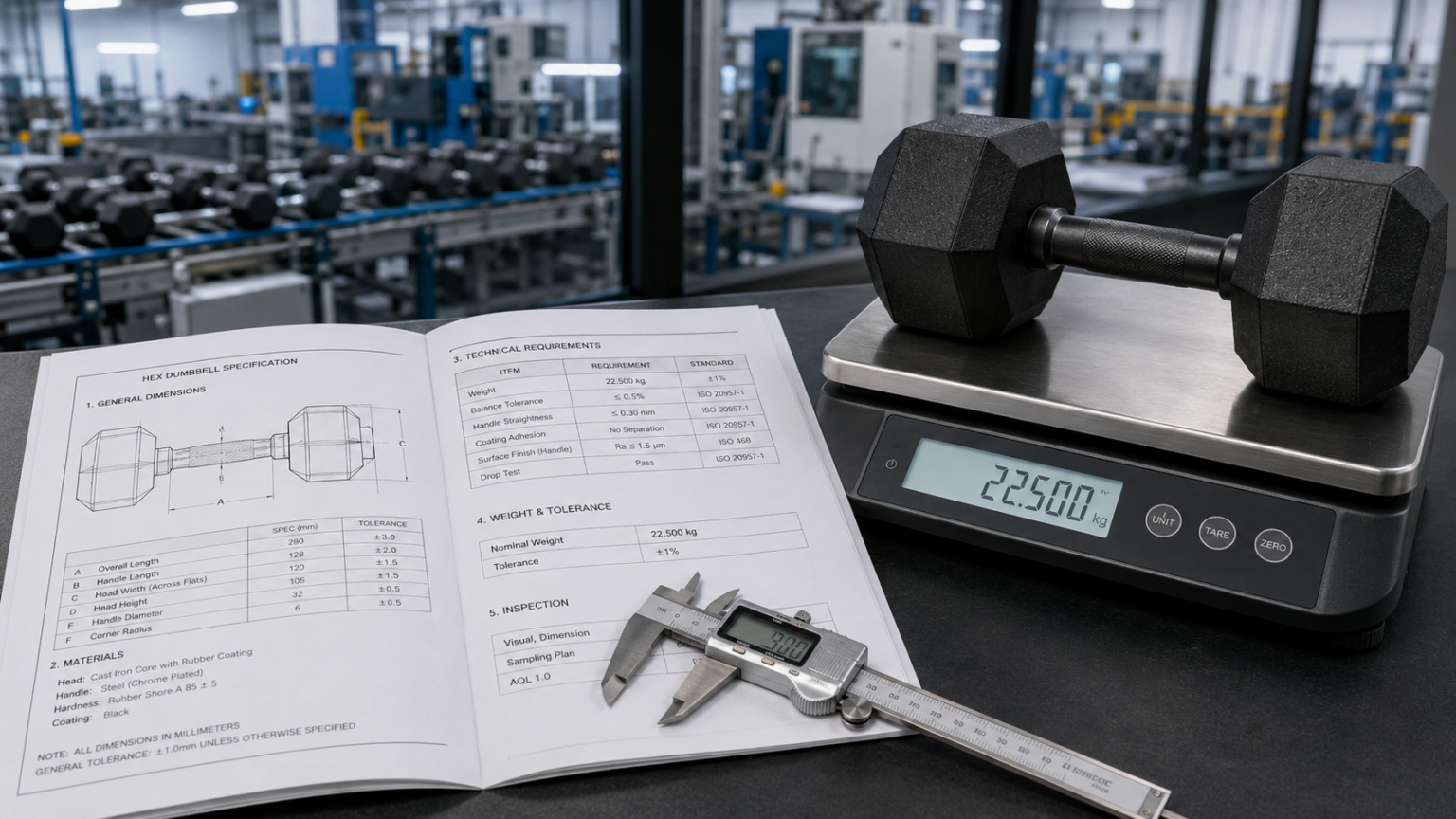
A kettlebell looks like the simplest product a fitness brand will ever buy: a ball of iron with a handle, no moving parts, nothing to assemble, nothing to calibrate. That appearance is why so much kettlebell sourcing is done by photograph and price list, and why so many buyers discover, one container too late, that the simplest product in the catalog is one of the easiest to get wrong. The failures are rarely dramatic; they are corrosive. Handles arrive with casting seams that tear palms in the first month of classes. Coating flakes off in sheets around the handle window. A 16-kilogram bell weighs 17.1 kilograms, its pair weighs 15.4, and a coach notices before the buyer does. Bases are uneven, so bells rock during renegade rows. None of these defects is visible in a product render, every one of them traces to a decision made in the foundry or the finishing line, and all of them are preventable by a one-page specification that most purchase orders never include. As a Taiwan-based manufacturer that has produced strength equipment since 1980, we have cast, ground, coated, and shipped kettlebells at every quality tier the market sells, and we have also inspected the incoming samples our own customers bring us after a sourcing attempt elsewhere went wrong. This guide condenses that experience into the questions, numbers, and clauses that separate a kettlebell line customers reorder from one they return.
The structure of this guide follows the life of the product. We begin in the foundry, because kettlebell quality is decided at the casting stage more than anywhere else, and because the phrase gravity-cast, which appears in nearly every supplier’s marketing, means both more and less than buyers assume. We then spend serious time on the handle, the only part of the product your customer’s skin ever touches, where the gravity-cast versus machined question actually lives and where we will give you an honest answer that depends on your market rather than a slogan. From there we compare coatings and finishes, because surface treatment drives more of the visible quality difference and more of the cost variance than any other line item; we translate everything into a specification template you can adapt directly into a request for quotation; and we close with factory vetting, production risk, and the frequently asked questions we hear from distributors and brand owners. Throughout, we will disclose the trade-offs plainly, including where the cheaper option is genuinely adequate, because the goal of good kettlebell sourcing is not maximum specification; it is the correct specification for the customer who will chalk up and pick the bell off your rack. A note on how to read the trade-offs we present: kettlebells occupy an unusual position in a catalog because they are bought in long size runs, eight to twelve weights is typical, which multiplies every per-unit decision by the whole run and makes small specification choices financially visible in a way single-product purchases never are. A two-dollar coating upgrade is a rounding error on one bell and a real line item on a container of graded sets, which cuts both ways: it is why disciplined buyers refuse gold-plating they cannot sell, and why the same buyers pay without hesitation for the seam grinding and weight control their customers will feel on every repetition.
How a Kettlebell Is Made: Casting Fundamentals
Every conversation about kettlebell quality eventually returns to the foundry, so it pays to understand what actually happens there. A kettlebell begins as molten iron poured into a mold, and the industry-standard process for quality bells is gravity casting: the metal fills the mold under its own weight rather than under injected pressure, a family of methods described in any overview of metal casting. Done well, gravity casting in a properly vented mold produces a dense, void-free, single-piece bell whose handle and body solidified together as one continuous structure. Done cheaply, the same words on a datasheet can hide porous castings, cold shuts where two metal fronts met without fusing, and, in the worst budget product, handles cast separately and welded on, a construction that has no place under a swinging load. The three subsections below walk through what single-piece gravity casting should mean when the words are honest, what happens in the finishing steps between the mold and the coating line, and how to read the phrase machined handle, which describes a post-processing choice rather than a different way of making the bell. Understanding this sequence matters commercially because every downstream property you will specify, weight accuracy, handle feel, coating adhesion, base flatness, is either enabled or permanently compromised before the casting cools. It is also the stage where cost differences are most legitimate: melt control, mold maintenance, and unhurried fettling genuinely cost money, which means a quotation meaningfully below the market is not a negotiating triumph but a disclosure, telling you which of those three the factory has decided your customers will not notice. They will notice. The background on the product itself, its history and training use, is well summarized in the general reference on the kettlebell; what follows is the manufacturing view that reference leaves out.
Gravity Casting and Single-Piece Construction
The specification that matters most in the foundry is single-piece casting: the handle and body poured as one continuous piece of iron, with no weld, joint, or mechanical connection anywhere in the load path. A kettlebell is swung ballistically overhead by one hand, which makes the handle-to-body junction a fatigue-critical joint, and a welded or two-piece construction concentrates every swing’s stress on the weld; industry recalls and the occasional viral photograph of a separated handle nearly always trace to this shortcut. Single-piece construction is standard at every reputable foundry, but standard is not the same as verified, so your specification should state it explicitly and your sample inspection should confirm it: examine the junction area for weld beads or filled seams under the coating, and if the order is large, a cut bell tells the whole truth for the price of one unit. The iron itself deserves a line in the spec as well. Most bells are cast from gray iron, whose properties are well documented in the metallurgy of cast iron; it is dimensionally stable, damps vibration well, and casts cleanly, and for kettlebells it needs no exotic alloying, but foundries economize by stretching melts with high scrap ratios, which increases porosity and weight variance. Ask the factory what charge materials it uses, whether it performs spectrometer checks on melts, and what its casting reject rate is; the fluency of the answers tells you whether you are speaking with a foundry or a trading company with a foundry’s photographs. Mold quality completes the picture: worn molds produce flash, shifted parting lines, and growing dimensional drift across a production run, so ask how many cycles molds run before refurbishment, and require in the spec that parting-line flash on the handle be fully removed, a finishing obligation the next subsection takes up.
From Mold to Metal Prep: Fettling, Grinding, and Surface Quality
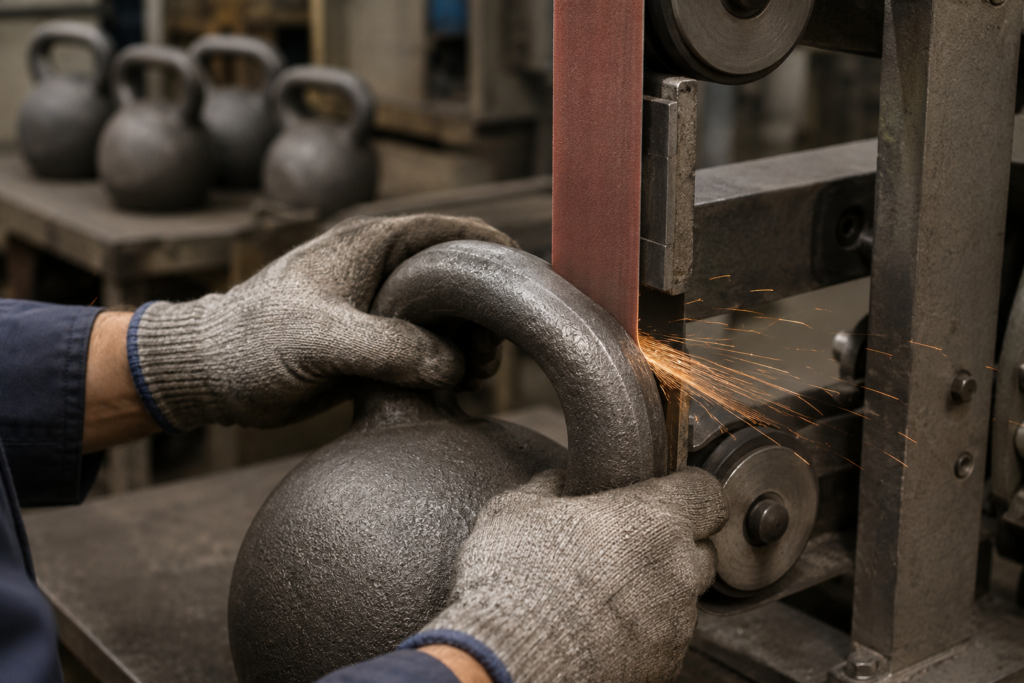
A bell that leaves the mold is not a product; it is a casting wearing sand, flash, and sprue stubs, and the unglamorous stage between casting and coating, called fettling, is where hand feel is actually manufactured. The casting is shot-blasted to remove sand and scale, the gates and risers are cut back, and the parting line, the seam where mold halves met, is ground smooth, most critically along the handle, where a residual seam becomes a blister generator under high-repetition training. Quality differences here are stark and entirely process-driven: a factory that budgets grinding time produces handles that feel seamless under chalked palms, while one that rushes fettling ships handles with a faint ridge that no coating will hide and every user will find within one session. Surface preparation also determines coating survival, because paint and powder adhere to clean, appropriately roughened metal and peel from smooth, oily, or dusty surfaces; a coating failure blamed on the paint is very often a preparation failure underneath, which is why your specification should address the substrate, not only the topcoat. Concretely, specify that handle parting lines be ground flush and polished to a stated smoothness, that the entire casting be shot-blasted before coating, and that bases be ground flat so the finished bell stands without rocking, then verify all three on samples with your fingers, a flat table, and a straightedge, no instruments required. This is also the stage where the window, the opening between handle and body, is dressed; inconsistent window dressing changes the insertion feel for two-handed swings and goblet holds, and dimensional consistency of the window across a size run is a small spec line that group-training customers will silently thank you for.
What Machined Handles Actually Are
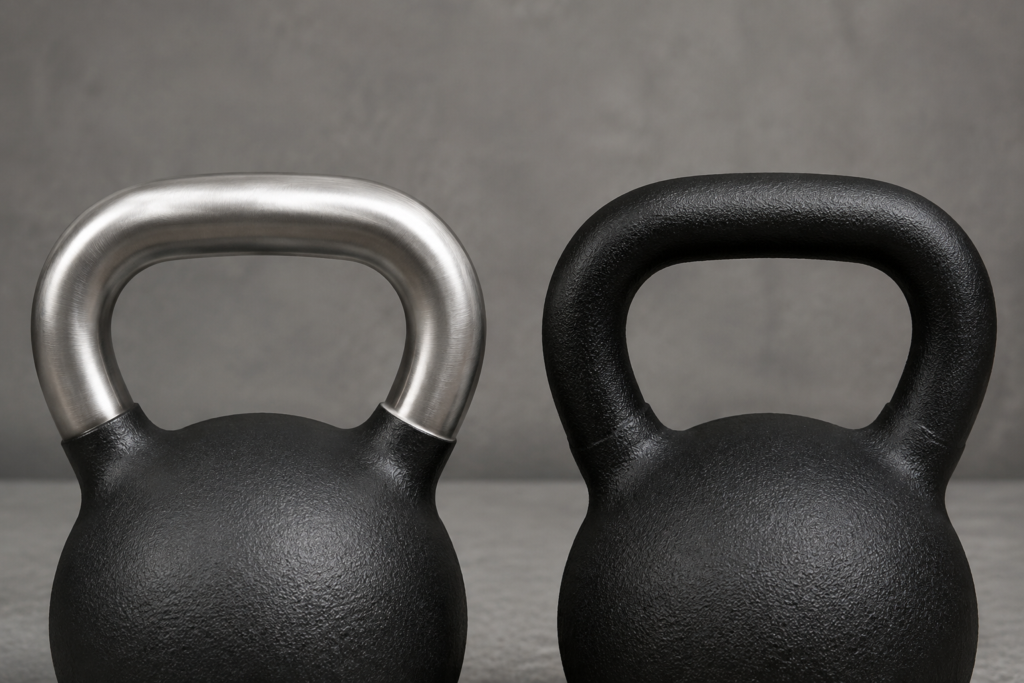
The phrase machined handle causes more confusion in kettlebell sourcing than any other term, so here is the plain version: machining is a finishing operation performed on a cast handle, in which the handle is turned or ground to a precise diameter and a uniformly smooth, bare-metal surface, most familiar from competition-style bells whose handles are left uncoated. Machining does not change how the bell was made; a machined handle on a gravity-cast bell is still a single-piece casting, simply post-processed to tighter dimensional and surface tolerances. What machining buys is precision and consistency: exact handle diameters repeatable across thousands of units, a surface with no casting texture at all, and the specific smooth-but-grippable feel that kettlebell sport athletes and high-volume snatch programming demand, since bare machined steel interacts with chalk more predictably than any coating. What it costs is real: machining adds a production step and price, the bare surface needs corrosion protection in transit and honest care guidance in service, and, importantly, many general-fitness users do not prefer it, because a good powder-coated as-cast handle holds chalk better for mixed-grip work and shrugs off humidity that will spot a bare handle. The honest sourcing answer is therefore market-dependent rather than tiered: specify machined handles for competition-pattern bells and chalk-heavy performance audiences, and specify well-fettled, smoothly coated as-cast handles for general commercial and home lines, where they are not a downgrade but the correct engineering choice. A supplier who pushes machining as universally superior is selling a process, not advising a buyer, and the reverse claim deserves equal suspicion. If your catalog serves both audiences, the clean solution is two products sharing one foundry: a competition-pattern line with machined 35-millimeter handles and a fitness line with coated scaled handles, differentiated honestly in your marketing by use case rather than ranked by price, because ranking them teaches customers that one of your own products is the lesser one, when the truth is that each is the correct engineering for its training style.
Handle Standards: Diameter, Window, and Grip
Whatever finishing route you choose, the handle’s geometry decides how the product trains, and geometry is where a specification earns its keep because it is invisible in photographs and decisive in use. Handle diameter, window opening, and surface finish interact with every lift in the kettlebell library, and they are also where market conventions differ enough that a buyer must actively choose rather than assume. The two subsections below cover the dimensional standards worth writing down and the grip-surface decisions that follow from your coating choice. One framing note first: unlike barbells, kettlebells have no single governing dimensional standard for fitness use; the closest thing to codified dimensions comes from the competition side of the sport, where kettlebell lifting federations fix the bell’s overall size and 35-millimeter handle regardless of weight, and everything outside competition is convention. That vacuum is precisely why your spec sheet, not the supplier’s habit, should be the document that defines your line, because two foundries can both be correct to their own house standard and still ship you a rack of mismatched product. The commercial consequence of that vacuum runs in your favor once you see it: a documented house geometry is a brand asset that budget competitors cannot copy from a photograph, because it lives in tolerances rather than in looks, and customers who train on a consistent handle across your whole size run come back for the consistency without ever knowing its name.
Handle Diameter and Window Dimensions
Handle diameter drives grip fatigue, and grip fatigue drives how your product reviews read after month one. Fitness-line kettlebells conventionally run handle diameters from roughly 30 to 38 millimeters, scaling up with bell weight, while competition-pattern bells hold a constant 35 millimeters at every weight so that technique transfers across the progression. For a general commercial line, a scaled diameter is the right call, but the scaling schedule must be stated: a spec that says handle diameter 33 millimeters plus or minus 0.5 at 16 kilograms is enforceable, while a spec that says comfortable handle is decoration. Window dimensions, the clear opening between handle underside and bell body, matter just as much: too small and two-handed swings jam knuckles and goblet holds pinch forearms, too large and the bell rides awkwardly on the forearm in rack and overhead positions, and inconsistent windows across a size run force users to relearn insertion at every weight. Specify window width and height per size, and specify handle cross-section too, because a subtly oval handle, common when grinding is aggressive, loads the fingers differently than a round one. Where your line spans both fitness and competition patterns, resist the temptation to average the two conventions into a house hybrid; serve each audience its own geometry, and let the two products share iron, coating systems, and quality gates instead. These numbers are exactly the kind of dimensional detail we walk through when helping brands build a line, and they belong in the same drawing package as the weight tolerance and coating callouts discussed later, the package our OEM and ODM service exists to produce.
Grip Surface: Texture, Chalk, and Sweat
The handle’s surface is a tribology problem wearing a fitness costume: skin, sweat, chalk, and coating meet at a few square centimeters under ballistic load, and small surface decisions produce large differences in training feel. For coated handles, texture is set jointly by the fettling quality underneath and the coating’s own finish: a powder coat can be laid glossy and slick or with a slight orange-peel texture that holds chalk, and the correct answer depends on programming. High-repetition swing and class formats favor a matte, lightly textured coat that retains chalk and stays secure under sweat; slick gloss on a handle is the single most common grip complaint in budget bells, and it is specifiable out of existence with one line: handle coating to be matte or satin finish, gloss level stated, sample-matched. For machined bare handles, the variables are surface roughness and corrosion care: the finish should be smooth enough not to abrade skin over hundreds of repetitions yet not polished to glassiness, and because bare steel oxidizes, your packaging spec needs rust-preventive oil and your customer documentation needs honest care guidance. Whichever route you choose, insist that grip texture be defined by a retained golden sample rather than adjectives, because texture drifts as coating parameters and grinding belts change, and the sample is the only arbiter both sides can hold. And when your customers ask why our own hexagon dumbbell line carries the handle standards it does, the reasoning is the same discipline applied to a different product: geometry and surface defined by document and sample, then held batch after batch through manufacturing capabilities built for exactly that consistency. One last practical test costs nothing and predicts everything: chalk your hands, perform twenty swings and ten snatches with the actual sample, and note where your grip is at the end, because a handle evaluated by a spreadsheet and a handle evaluated by a forearm agree most of the time, and the exceptions are precisely the products you should not order.
Coatings and Finishes Compared
Coating is where kettlebell quotations diverge the most and where the visible difference between tiers actually lives, because the coating is simultaneously corrosion protection, grip surface, floor protection, and the entire cosmetic identity of your line. The mainstream options are powder coating, the electrostatically applied and oven-cured polymer finish whose process is summarized well in the overview of powder coating; electro-coating, or e-coat, a dip-and-cure process that reaches recesses uniformly and serves beautifully as a primer layer under powder; traditional wet enamel, the budget route, familiar from older cast bells and prone to chipping; premium multi-layer systems such as e-coat plus powder, which pair penetration with build thickness; and specialty finishes, from the bare machined handle already discussed to cerakote-style thin ceramics and the polyurethane or CPU encasements used on studio-oriented soft-touch lines. The table below compares them on the axes buyers actually feel: durability, grip, corrosion resistance, cosmetics, and cost. Read it with your customer in mind rather than the showroom: a garage-gym audience in a humid climate weighs corrosion resistance heavily, a boutique studio weighs color fidelity and cleanliness, a throughput-focused functional gym weighs chip resistance above all. And whichever system you select, remember the lesson from the fettling section: coating quality is substrate preparation plus application plus cure, and a specification that names the system without naming preparation and thickness has specified half a coating.
| Finish System | Durability | Grip Character | Corrosion Resistance | Cost | Best Fit |
| Powder coat (single layer) | Good; chips at edges under abuse | Excellent with matte texture; holds chalk | Good | $$ | Commercial and home fitness lines; the industry workhorse |
| E-coat + powder (two layer) | Very good; premium build | Same as powder topcoat | Very good, incl. recesses | $$$ | Premium lines; humid markets |
| Wet enamel / paint | Fair; chips and wears quickly | Often glossy and slick | Fair | $ | Budget lines where price leads |
| Machined bare handle (+ coated body) | Handle immune to chipping; needs care | Competition-standard chalk feel | Requires oiling; spots in humidity | $$$ | Competition-pattern and performance lines |
| Urethane / soft-touch encasement | Excellent body protection | Body-only; handle usually coated steel | Excellent on encased areas | $$$$ | Studio and hospitality settings |
Color and climate deserve a closing note, because they are decided in this section whether or not you decide them consciously. Color-coding bells by weight, whether as full-body color, a painted band, or colored weight numerals, is a genuine usability feature in group settings and a merchandising advantage on any rack, but it multiplies your coating SKUs and your minimums, so decide the color system at line-design time and hold it stable across reorders, because a rack in three shades of the same red advertises inconsistency more loudly than any defect. Climate belongs in the same decision: if your distribution includes coastal or tropical markets, weight corrosion resistance more heavily than the showroom suggests, favor the e-coat-plus-powder build or at minimum specify salt-spray performance, and extend the thinking into packaging, where a rust-preventive wrap and desiccant cost cents and prevent the single most common complaint on sea-freighted iron. These are small decisions individually, but coating is where they compound: the finish is the only part of your kettlebell the customer sees in a photograph, touches in a session, and judges in a review, and a coating specification that covers system, preparation, thickness, texture, color, and climate has quietly specified most of the brand experience. It is also the specification your customer service team will thank you for, because coating complaints, unlike casting complaints, arrive with photographs attached and refund requests implied, and every one your spec prevents is a conversation nobody has to have.
What to Put in Your Kettlebell Spec Sheet
Everything discussed so far compresses into a document, and the document is the deliverable of this entire guide: a kettlebell specification that turns quotations into comparable offers and samples into enforceable standards. The table below is the template we recommend, organized as the spec lines, the numbers to state, and the reason each line exists. Three of its rows deserve narrative emphasis. Weight tolerance is first, because it is the specification most often assumed and least often verified: fitness-line bells should hold plus or minus 1.5 to 2 percent of nominal, competition-pattern bells tighter, and the tolerance should be paired with a weighing protocol, batch-sampled on a calibrated scale with results reported, because a tolerance without a measurement method is a hope. Base flatness is second: the bell must stand stable on a flat surface, machined or ground flat with a stated maximum rock, both for floor exercises and because a rocking bell on a retail shelf undoes every other quality signal your brand paid for. Branding is third: logos can be cast in relief, which is permanent and adds mold cost; laser-marked, which is crisp but subtle; or printed, which is vivid and vulnerable, and the choice interacts with coating selection, so decide branding and coating together rather than sequentially. The remaining rows follow the earlier sections. Hand this table, filled in, to every candidate supplier, and you will learn as much from which cells they push back on as from the prices they return; that conversation, multiplied across a few candidates, is the fastest supplier education available, and it is the same discipline we describe for free-weight buyers in our guide to the common mistakes when sourcing from OEM factories.
| Spec Line | What to State | Why It Matters |
| Construction | Single-piece gravity cast; no welded handles | Handle separation is the failure mode that ends brands |
| Iron and melt control | Gray iron; spectrometer-checked melts | Porosity and weight drift start in the melt |
| Weight tolerance | ±1.5–2% fitness; tighter for competition; weighing protocol | Accuracy is your brand’s credibility on a scale |
| Handle diameter | Per-size table with tolerance (e.g. 33 ±0.5 mm @ 16 kg) | Grip fatigue and training feel |
| Window dimensions | Width and height per size | Two-hand swings, rack and overhead comfort |
| Handle finish | Machined bare or coated as-cast; seams ground flush; texture per golden sample | The only surface the customer’s skin touches |
| Coating system | System, preparation, thickness, gloss level, color code | Durability, corrosion, cosmetics in one line |
| Base | Ground or machined flat; maximum rock stated | Floor stability and shelf presence |
| Branding | Cast, laser, or print; location and size | Permanence vs. cost; interacts with coating |
| QC and packaging | Batch weighing, visual standards, rust protection, drop-test packaging | The spec only exists if it is checked and survives transit |
Two practical notes on operating the template. First, fill it in yourself before sending it out, even where you must guess, because a spec sheet with your target numbers invites correction and counter-proposal, while a blank one invites the factory’s defaults, and the difference in the resulting quotations is the difference between comparing offers against your standard and comparing suppliers’ habits against each other. Where you genuinely do not know a value, say a window height for a 40-kilogram bell, mark it as open and ask each candidate to propose with reasoning; the quality of the reasoning is free diligence. Second, version the document: date it, number it, and reference the version in every quotation, sample approval, and purchase order, because six months into a program the question is never what did we ask for, it is which version did we ask for it in, and a versioned spec turns that from an argument into a lookup. The template also scales down gracefully: a buyer sourcing a single private-label set for a regional chain needs the same ten lines as a national brand launching a full graded system, only with smaller numbers in the quantity column, and factories treat both with more seriousness when the document arrives filled in. The sample approval that follows the spec, covered in the vetting section next, is described in more depth in our checklist of details to check before approving a sample, which pairs with this template as the inspection half of the same discipline.
Vetting Factories and Managing Production Risk
A specification is necessary but not sufficient, because the document only has force at a factory able and willing to be held to it, and kettlebell sourcing has a particular industry structure a buyer should understand before signing anything: foundry work and finishing work are often performed at different facilities, and the export-facing supplier may be a third company again, which means the quality you receive actually depends on a chain you cannot see from the quotation. This structure is not inherently a problem; specialized foundries pouring for several finishers can be excellent, and vertically integrated factories can be mediocre. What matters is visibility and accountability: knowing where each stage happens, who owns the quality obligation at each handoff, and whether your specification travels intact down the chain or dissolves into a verbal summary at the first transfer. The three subsections below give the vetting sequence we recommend: verifying the production chain itself, building the sample and production quality gates that make the specification enforceable, and managing the commercial risks, tooling, materials, and reorder consistency, that no inspection can catch because they live in the agreement rather than in the iron. None of this is adversarial; it is the shared administration of quality, and the factories worth partnering with will recognize every item because they already run the same checks internally.
Verifying the Foundry Chain
Begin by mapping who actually does what, because the answers restructure every later conversation. Ask directly: where is casting performed, is it your facility or a partner foundry, are fettling, machining, and coating in-house, and how does quality documentation transfer between stages? A serious supplier answers with names, locations, and process detail; a trading company answers with photographs and adjectives, and the difference is usually audible within one email. Where the chain includes a partner foundry, ask how melts are specified and verified, who inspects castings before finishing, and what the rejection loop looks like when finishing discovers a casting defect, because a chain that cannot reject upstream will ship the defect to you instead. For meaningful volumes, an audit is proportionate, in person or through an agent: an afternoon at the foundry tells you whether melt control, mold maintenance, and casting inspection exist as practices or as brochure sentences, and an hour on the finishing line shows you the grinding stations and coating preparation on which your handle feel depends. Our checklist for assessing an OEM manufacturer’s reliability applies here in full, with one kettlebell-specific addition: ask to see the factory’s own reject pile. Every honest foundry has one, and its contents, porous castings, cold shuts, handle seams caught at inspection, tell you both that defects occur, which is normal, and that they are being caught, which is the entire point.
Sample and Production Quality Gates
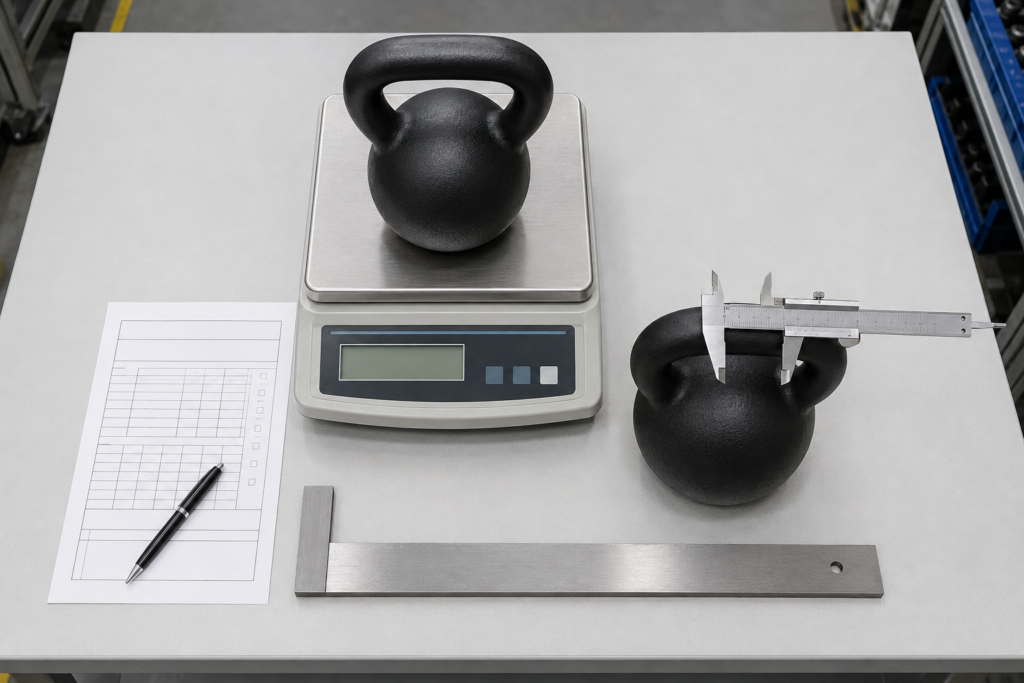
Samples are the specification made physical, and the sampling stage is where most sourcing outcomes are actually decided. Order samples across the full weight run rather than only the flattering middle sizes, because casting quality varies with section thickness, and the thin-walled 4-kilogram bell and the massive 48-kilogram bell stress different parts of the process; a factory that casts a beautiful 16 can still struggle at the extremes, and you want to know before tooling, not after. Inspect against the spec table above with simple instruments and patience: a calibrated scale for weight and pair matching, a caliper for handle diameter and window dimensions, a straightedge and flat table for base rock, and your bare hands, slowly, around the full circumference of every handle, because fingertips find seams that eyes miss. When samples pass, sign and retain golden samples on both sides, one in your office and one at the factory, referenced by number in the purchase order, because the golden sample is the arbiter of every future texture and color dispute that words cannot settle. For production, write the quality gates into the purchase order itself: batch weighing with recorded results, coating thickness checks at stated points, visual standards defined by photographs of acceptable and rejectable seams and finishes, and packaging requirements including rust protection and drop-survivable cartons. Consider third-party inspection for the first orders, stepping down frequency as history accumulates; a factory operating a certified system under ISO 9001 will already have the internal structure these requests plug into, which is itself a useful screening signal.
Commercial Risks: Tooling, Materials, and Reorders
The risks that remain after inspection are commercial, and they are managed in the agreement or not at all. Tooling first: kettlebell molds are real assets with real wear lives, so establish in writing who owns the molds your money creates, what their expected cycle life is, who pays for refurbishment, and what happens to the tooling if the relationship ends, because ambiguous mold ownership is the quiet lever by which a buyer becomes captive to a supplier. Materials second: iron, energy, and freight prices move, sometimes sharply, so agree the mechanism for price adjustment before the first surcharge email arrives, whether that is a fixed-price window, an indexed formula, or a renegotiation trigger, and resist open-ended clauses that convert every market tremor into a margin conversation. Reorder consistency third, and least visible: your second production run will be judged against your first by customers who own both, so the agreement should state that the factory holds your golden samples, drawings, and coating recipes under revision control, that process changes affecting fit, feel, or finish require notification, and that discontinued colors or handle geometries get a last-buy notice rather than a silent substitution. Finally, hold a modest buffer against the risks no clause prevents, a few weeks of safety stock on your fastest sizes and a qualified second source identified before you need one, because foundries have fires, floods, and holidays like every other industry, and resilience purchased calmly in advance always costs less than resilience improvised during a stockout. The buffer question is also where kettlebells differ pleasantly from complex equipment: the product neither expires nor updates, so safety stock carries no obsolescence risk beyond colorway changes you control yourself, and a pallet of your two fastest sizes is among the cheapest supply insurance a fitness brand can hold. Sourcing managed this way converts from a sequence of transactions into an operating relationship, which is where the compounding returns of consistent product actually come from.
Frequently Asked Questions
What is the difference between cast and machined kettlebell handles?
Casting is how the bell is made; machining is an optional finishing step. Quality kettlebells are gravity-cast in one piece, handle included. A machined handle is that same cast handle turned or ground to a precise diameter with a bare, uniform surface, the competition-style feel. A coated as-cast handle keeps the casting’s surface, smoothed by grinding and finished with coating. Machined suits chalk-heavy performance training; a well-fettled coated handle is the right choice for most general fitness lines.
How are kettlebells manufactured?
Quality kettlebells are gravity-cast: molten gray iron is poured into a mold and solidifies as a single piece, handle and body together. The casting is then shot-blasted, its gates and parting-line seams are ground off, the base is flattened, and the bell is coated, commonly with powder coat, sometimes over an e-coat primer. Premium lines add machined handles or urethane-encased bodies. The critical quality points are single-piece construction, thorough seam grinding, and proper surface preparation before coating.
What is a good weight tolerance for kettlebells?
Fitness-line kettlebells should hold within about 1.5 to 2 percent of nominal weight, so a 16-kilogram bell arrives between roughly 15.7 and 16.3 kilograms. Competition-pattern bells are held tighter, often within a few hundred grams. The tolerance only means something with a measurement method attached, so specify batch weighing on a calibrated scale with recorded results, and check pairs against each other as well as against nominal, since mismatched pairs are what users actually notice.
Why do kettlebell handles feel different between brands?
Because handle feel is manufactured in three separate steps that brands control differently: the casting’s parting-line seam is ground well or poorly, the handle is either machined bare or left as-cast, and the coating is applied slick and glossy or matte and chalk-friendly. Diameter conventions also differ between brands and between fitness and competition patterns. Two bells of identical weight can therefore feel completely different, which is why serious buyers specify diameter, seam finish, and coating texture against a retained sample.
What should a kettlebell spec sheet include?
Ten lines cover it: single-piece gravity-cast construction; iron grade and melt control; weight tolerance with a weighing protocol; handle diameter per size with tolerance; window dimensions; handle finish, machined or coated, with seam and texture standards; coating system with preparation, thickness, and gloss; base flatness; branding method and placement; and outgoing QC plus packaging requirements including rust protection. State each as a number or a named standard rather than an adjective, and lock a golden sample before production.
Key Takeaways for Kettlebell Buyers
Good kettlebell sourcing is the discipline of refusing to buy a silhouette. The product’s simplicity is real, but it is the simplicity of a casting done right: one piece of honest iron, a handle whose seam was ground by someone given the time to do it, a coating that was prepared for and not merely sprayed, a weight that matches its label, and a base that sits flat on the floor and flatter still in a customer’s estimation of your brand. The gravity-cast versus machined question that names this guide resolves, like most sourcing questions, into knowing your customer: machined bare handles for the chalk-and-competition audience, well-executed coated handles for everyone else, and a specification either way, because the words on the quotation guarantee nothing that the document and the golden sample do not hold in place. Write the ten-line spec, send it to candidate factories, weigh and handle the samples across the size run, verify the chain from foundry to finish, and put the quality gates in the purchase order where they belong. Do this once, carefully, and a kettlebell line becomes what it should be, the lowest-maintenance product family in your catalog, reordering itself year after year while your attention goes where the problems are. The economics reward the discipline quickly: kettlebells carry no moving parts to fail and no electronics to age, so a well-specified line’s warranty and return rate settle near zero, its reviews compound instead of averaging, and the containers that follow the first one require nothing from you but a purchase order referencing a spec version and a golden sample that both sides already trust. When you are ready to turn a specification into castings, our team has been pouring, grinding, and coating iron for more than four decades, and the kettlebell line we build for brands is the same discipline made visible; we are glad to walk through your spec line by line, including the cells you have not filled in yet, because the fastest way to judge a foundry partner has always been to hand it a demanding document and watch whether it responds with excuses or with better numbers.